
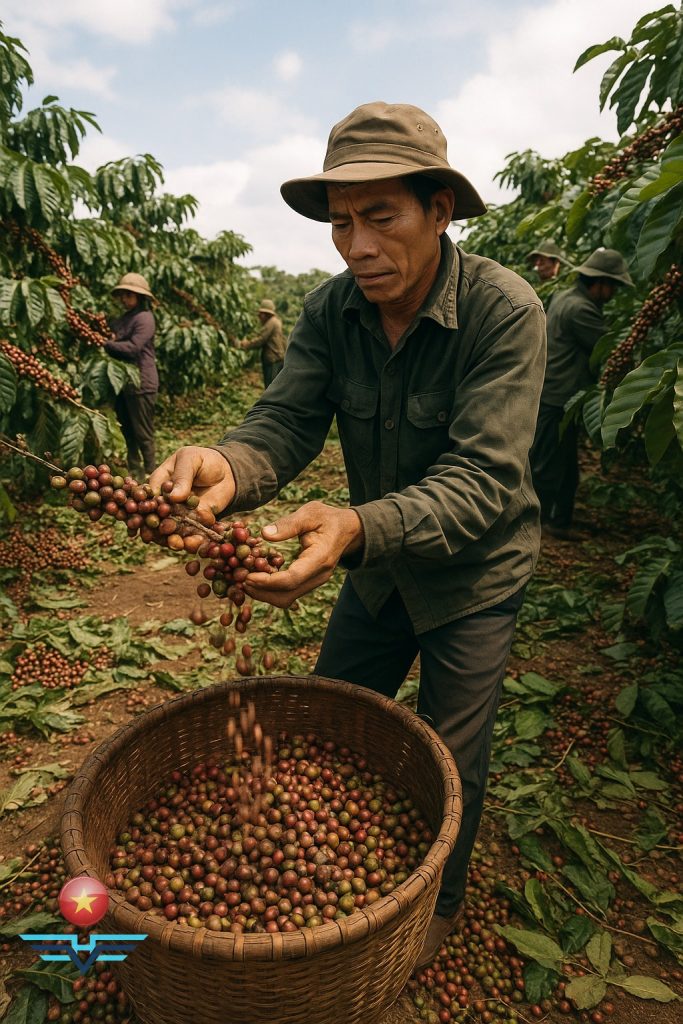
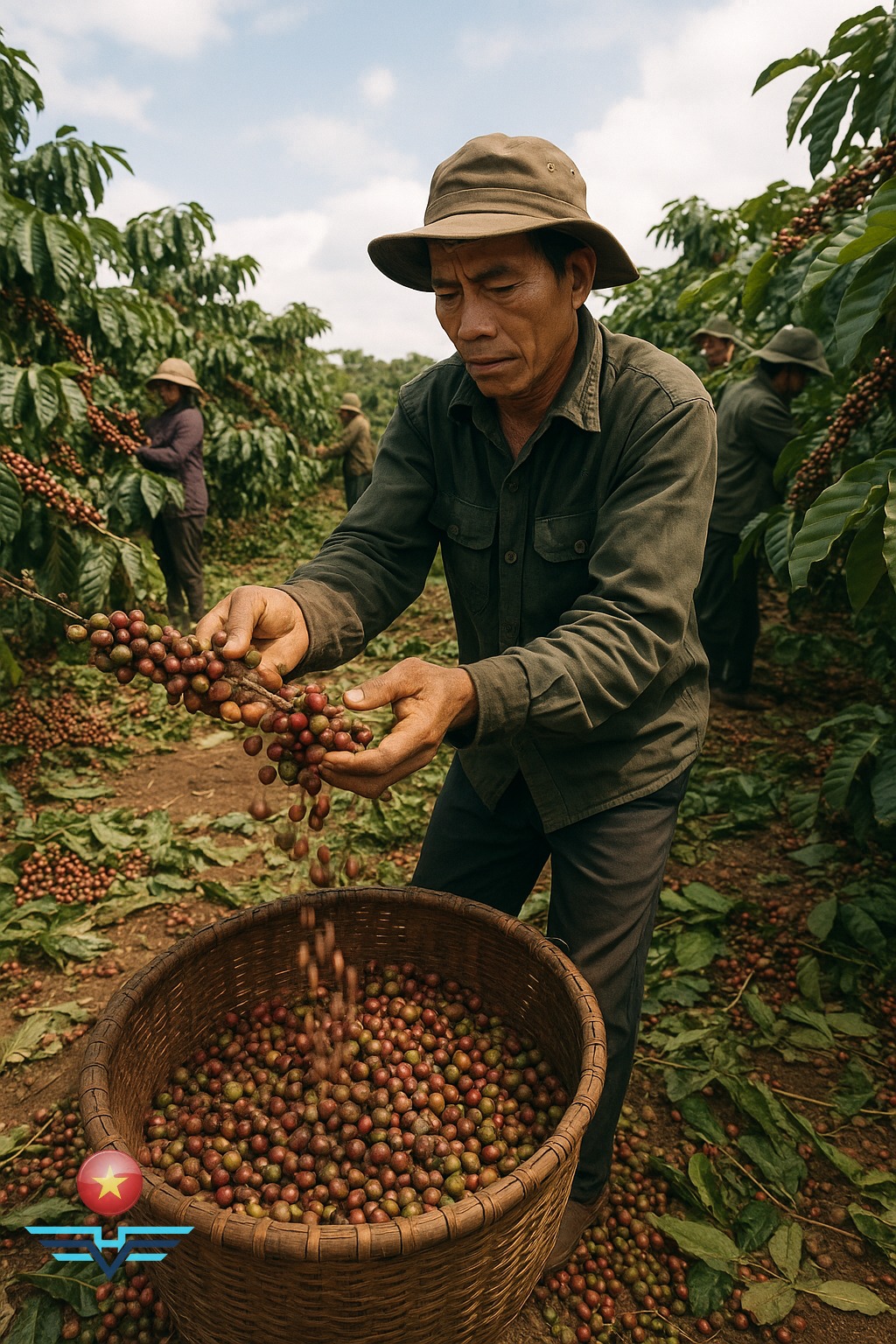
Each main harvest season, coffee growers in Vietnam’s Central Highlands struggle with a severe shortage of labor. Recently, many farmworkers have switched to short-term jobs on rubber plantations, making the labor crunch even more serious.
Rubber Draws the Workforce
Under a provincial plan to convert degraded forest land into rubber plantations, Gia Lai has authorized 14 companies to plant large areas of rubber. The two districts with the biggest conversions are Ia Púch (Chư Prông) and Ia Blứh (Chư Pưh).
In Ia Blứh alone, five companies have been allocated land and are rushing to establish their plantations, hiring large numbers of seasonal workers for digging holes, planting, fertilizing, and weeding. It is now the weeding season for young rubber trees. Daily wages for this work range from 70,000 to 80,000 VND.
Some companies subcontract entire tasks, which attracts even more local workers. Many people work from early morning until late at night, earning up to about 400,000 VND a day. For example, husband and wife Nguyễn Thắng from Ia Blứh can bring in nearly 1 million VND a day by taking on weeding contracts.
Lê Thị Minh of Thiên An hamlet, Ia Blứh, said: “I’m working for Company 194 on a daily contract, earning 70,000 VND a day just clearing weeds and mounding soil around the rubber. It suits women in the village, so many of us joined.”
Hoàng Minh Tiến, a manager at 194 Investment & Construction JSC, noted: “Normally we employ 120–150 workers, but as coffee harvest peaks the workforce has dropped to less than half. We’ll have to reschedule tasks and recruit again.”
Coffee Harvests Wait While Fruit Drops
The Central Highlands coffee harvest began about a month ago, yet many groves heavy with ripe cherries remain unpicked. With erratic rain and wind, if the fruit is not harvested within a few weeks, much of it may simply fall to the ground.
Nguyễn Duy Hậu of Ia Le commune, Chư Pưh district, owns 8 ha of ripening coffee but is still searching for pickers. “Compared with previous years it’s much harder to hire workers. In the past the highest rate was 70,000 VND per day; now it’s up to 100,000 VND and I still can’t find enough people,” he said.
Many families with ripening fields now rely on relatives to harvest bit by bit—“whatever we can get is better than nothing.” Fearing fruit drop and theft, some growers travel to Bình Định, Phú Yên, Nghệ An or Hà Tĩnh, or call friends to recruit workers. “We offer 80,000–100,000 VND per day plus lunch, but still can’t find laborers. All we can do is wait,” said Mr. Phương of Ia Blứh.
Cao Xuân Hưởng of Tam Ba Farm (Chư Pah, Gia Lai) explained: “Our 123 ha of coffee is entering harvest. We’ve hired about 30 workers to pick only the fully ripe cherries. Once the trees reach over 90 % ripeness and most local farmers have finished, we’ll recruit 200–300 workers per day. Even raising wages now might not bring enough pickers.”
Rising Costs and Quality Risks
The scramble for labor has driven wages sharply higher. In the rush to harvest, branches are more easily broken, which hurts next year’s yield. Early, large-scale picking also means more unripe cherries, reducing both the quantity and quality of the final coffee crop.