
Do Russians still love tea?
Table of Contents
Russians are often regarded as a tea-drinking nation, and there are good reasons for that: 78% of people say they drink at least one cup of tea every day — and I’m no exception. We love to pair tea with sweets or pastries and usually have several “tea breaks” throughout the day.
However, coffee-based beverages have become a major trend, and in recent years, coffee has begun to take the lead among consumers, especially in big cities.
Coffee consumption in Russia is still lower than in some European countries — 0.4 kg per person compared to Finland’s 10.2 kg per person in 2020, according to Euromonitor.
Some figures behind Russia’s coffee market
-
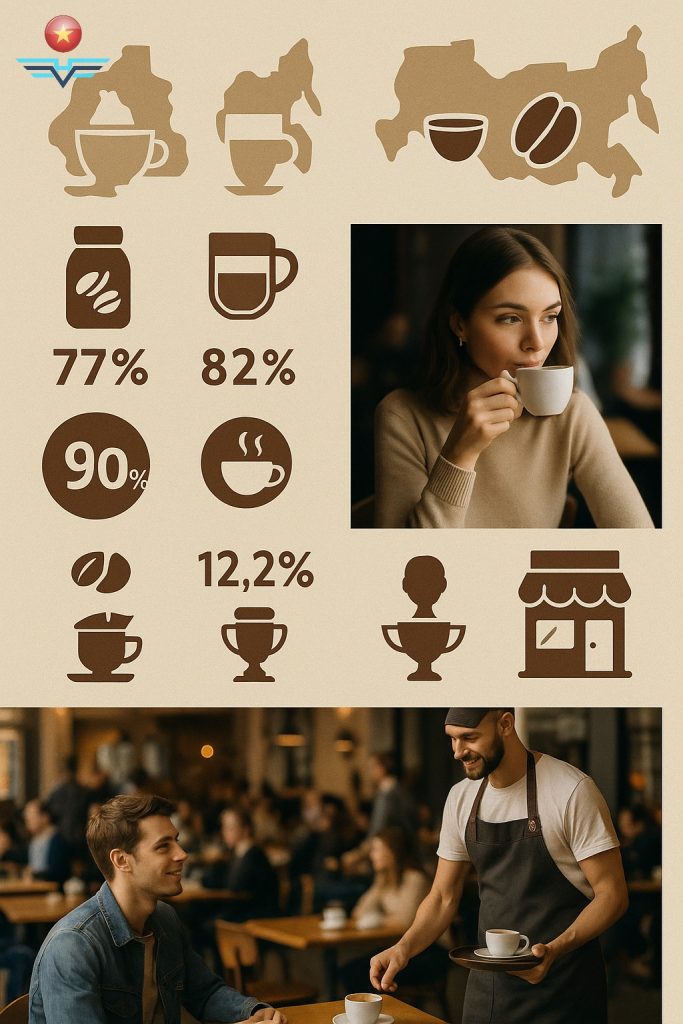
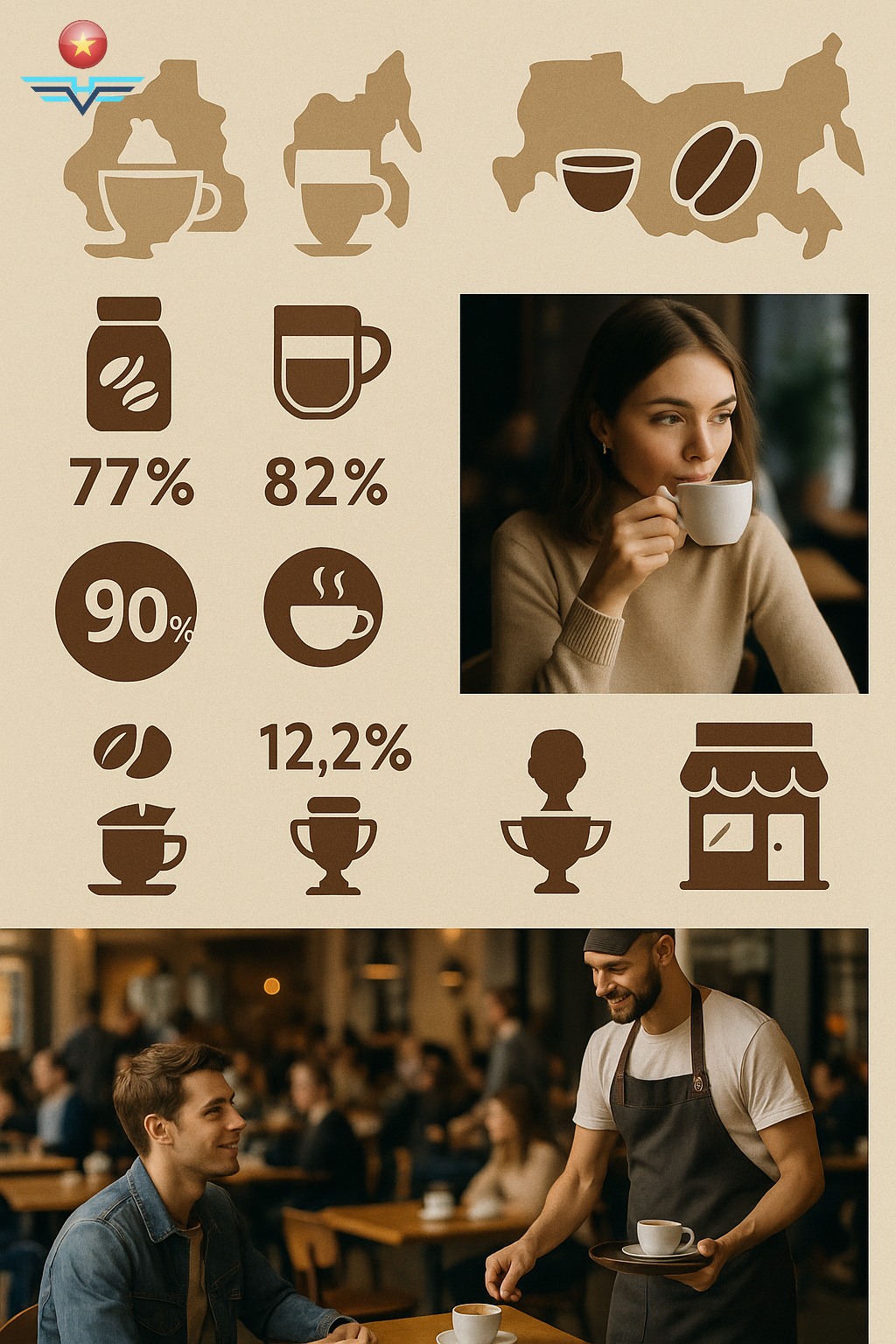
77% of people drink coffee daily
-
82% drink tea every day
-
90% say they drink coffee in general
-
Instant coffee remains the most common way to consume coffee, but “regular” coffee consumption is steadily increasing
-
Over 90% of people drink hot tea daily or weekly, compared to 85% for coffee
-
Dark roast or espresso-style coffee is the most popular
-
The Russian café market grew 12.2% last year — from 2,500 cafés in 2018 to 2,800 in 2019
The unique path of specialty coffee in Russia
A strong professional coffee community, skilled roasters, and economic growth have made specialty coffee popular and affordable among young Russians. Coffee is no longer just an energy booster — it’s a new kind of religion, a beautiful ritual that adds flavor to life.
At the PIR Coffee Expo (an annual coffee event in Moscow) in 2019, I took part in an intriguing cupping session organized by one of Russia’s most renowned specialty roasters, Dmitry Boroday.
He questioned the trend of “cinnamon anaerobic fermentation” that had become fashionable in recent years. For the experiment, he fermented green coffee beans by soaking them in a cinnamon solution. During the tasting, we had to guess which coffee had “artificial” cinnamon flavor and which one had natural notes — a tough challenge, especially with low concentrations of cinnamon infusion.
I also bought a pack of Ethiopia Guji Uraga, fermented in oak barrels previously used for craft beer and bourbon. It sounded crazy but tasted wonderful.
Beyond fermentation methods, Russian coffee experts are also experimenting with brewing techniques. Sergey Stepanchuk, the winner of the 2018 Russian Brewers Cup, designed and 3D-printed his own pour-over brewer called Octo Storm.
Made of food-grade carbon-infused plastic with insulation, it’s soon to be available in ceramic form. The maker explains: “Its unique shape makes brewing and extraction speed easier to control.”
Russia’s success in global coffee championships
Russian baristas and roasters have achieved remarkable results on the world stage:
-
World Coffee Roasting Championship 2019 – Winner: Arseny Kuznetov
-
World Coffee Roasting Championship 2018 – Winner: Vladimir Nenashev
-
Cezve/Ibrik Championship 2019 – Winner: Sergey Blinnikov
-
Cezve/Ibrik Championship 2018 – 2nd Place: Marina Khyuppenen
The Russian coffee industry facing a new reality
While Russia’s coffee scene shows great potential, predicting its future in the post-COVID-19 era remains difficult. Most cafés were closed or operated on a “takeaway-only” basis for months, which inevitably affected the entire industry.
In Russia today, coffee has become an essential part of young people’s lifestyles. They love cappuccino, latte, espresso, and black coffee without sugar.
While “coffee to go” is increasingly common in the West, Russians still prefer their traditional habit of visiting their favorite cafés.
Coffee companies have adapted to this behavior by designing spacious venues with seating areas and diverse menus that include appetizers, meals, and other drinks. Moscow and Saint Petersburg are home to the largest concentration of cafés — from global brands like Starbucks and Costa Coffee to numerous local chains that form the vibrant core of Russia’s growing coffee culture.