
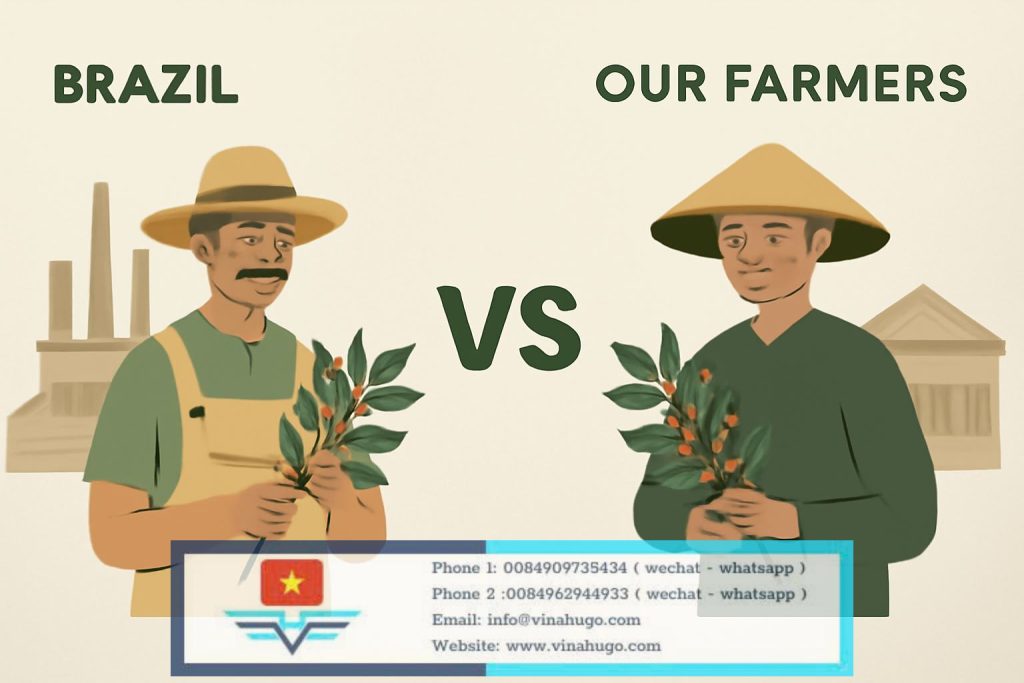
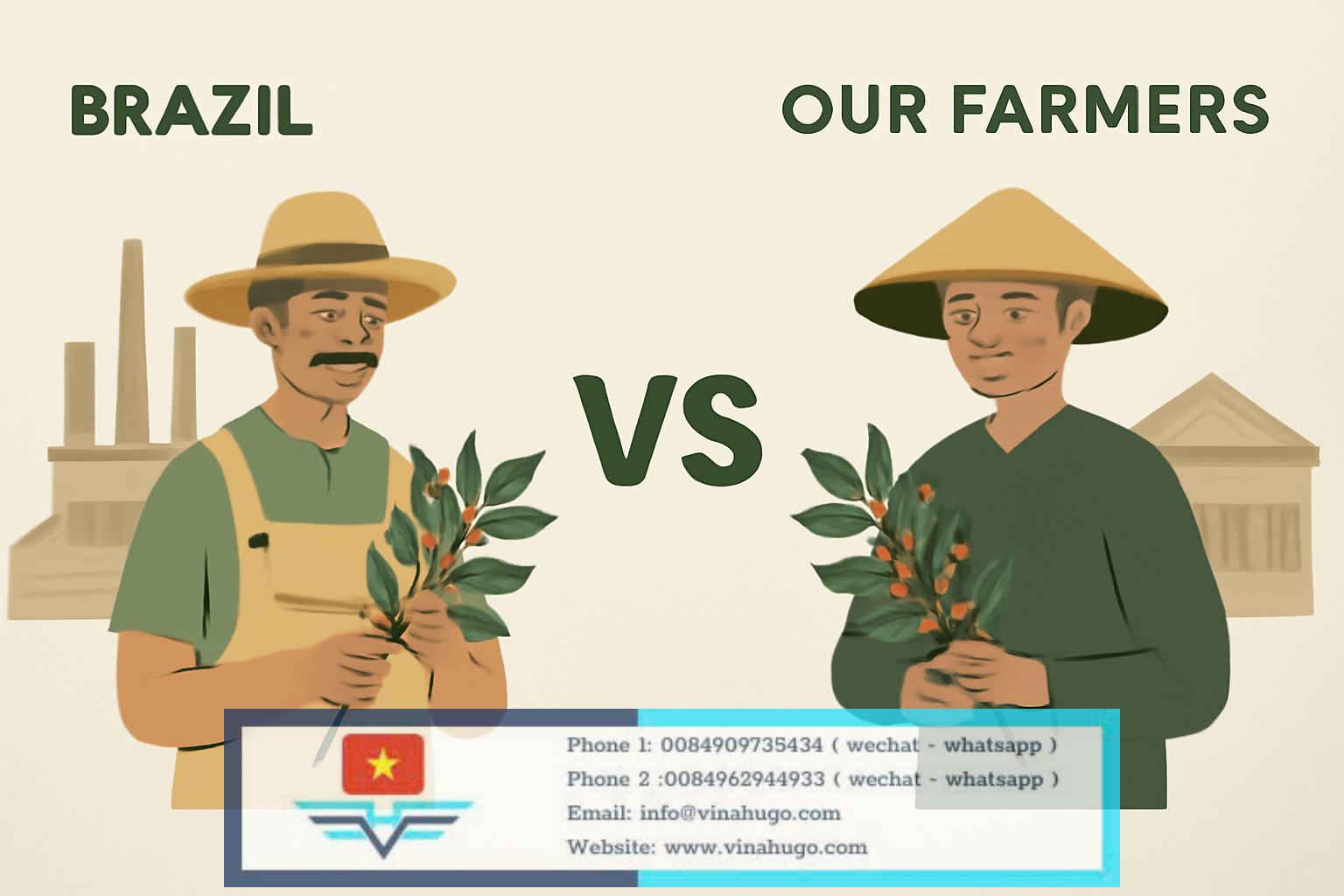
Brazil is the world leader in coffee production, while Vietnam ranks second. However, we have historically been and may continue to be one of the top coffee exporters globally.
This position of being at the top is not something to be proud of; rather, it is a concern. When domestic news outlets eagerly announce that Vietnam has surpassed Brazil in coffee exports, it highlights both the progress in agriculture and our tendency to want to be number one, even though:
“Being number one without knowing where to go
Where to go is unclear, but we keep going as number one.”
Here, I would like to highlight three key differences between the coffee industries in Brazil and Vietnam. While historical factors, customs, and development conditions of the two countries differ, there are many things we can learn from Brazil, especially regarding subjective factors that can be applied to our context.
1. Brazil is the Second-Largest Consumer of Coffee
Table of Contents
Every year, Brazilians consume about 50% of their coffee production, second only to the United States. It’s safe to say that Brazil, as the world’s largest coffee producer, is comfortably in the second position for coffee exports because they recognize that domestic consumption provides a stable support base for coffee farmers. Local roasters compete with international buyers, which gives farmers more leverage in deciding who to sell to. The Brazilian government also has favorable policies for the roasting industry, including low import taxes on both green and roasted coffee, as well as instant coffee.
In contrast, Vietnam’s domestic coffee consumption is quite low, accounting for just about 5-7% of total production. According to a 2004 World Bank report, Vietnam has immense potential for domestic coffee consumption, but this has not significantly changed over the past decade. If domestic consumption reached 30% of the total production, the coffee roasting industry could generate about 7-10 billion USD annually, which is 2.5 to 3 times the value of coffee exports.
In Vietnam, coffee roasting is classified under “other food production,” which is puzzling considering the significant economic potential it holds.
2. Brazil Has the World’s Largest Coffee Farmers’ Cooperative
Cooxupé is the world’s largest coffee cooperative, representing smallholder farmers. Around 80% of its members own small farms, and the cooperative controls 1/10 of Brazil’s total coffee production. Cooxupé’s voice is powerful enough to influence global coffee prices. It is a lesson in the power of unity, transparency, and regulations for mutual benefit. Cooxupé is not only a major exporter of high-quality coffee but also provides crucial support to its members, including financial services, agricultural advice, weather data, and soil analysis.
From this, we see why Brazilian farmers can quickly react to market changes and sell their coffee at favorable prices. Their cooperation with large organizations ensures they are competitive in the global market. In Vietnam, however, farmers often struggle with the uncertainty of selling quality coffee due to a lack of organized infrastructure.
3. Brazil Has a Functional Coffee Exchange
Brazil’s BM&F BOVESPA exchange, established in 1890, has evolved to allow farmers, traders, and brokers to buy and sell coffee electronically. Through the exchange, farmers can sell coffee at any time when they feel the price is right, and they can even sell futures contracts to secure better prices for their coffee.
In contrast, Vietnam lacks a similar functional commodity exchange. The country has a warehouse system that can store the coffee produced in Dak Lak province, but these facilities are often underutilized, and farmers still have no reliable place to store their products safely. The lack of a well-functioning coffee exchange hampers the ability to set clear prices and manage market volatility effectively.
4. Conclusion
While we have the resources to replicate what Brazil has done, such as investing in coffee exchanges and warehouses, we must also focus on creating a sustainable mechanism where farmers can be supported and empowered in a way that ensures fair trade and long-term growth. The role of farmers is central to the coffee industry, as they are the ones who produce the raw materials, and supporting them is key to building a thriving coffee sector.