
This project, researched, transferred, and applied by the Biotechnology Joint Stock Company (CPCNSH), won First Prize at the 2012 Vietnam Science and Technology Innovation Awards. “The technology is easy to disseminate and can be applied anywhere,” affirmed Dr. Le Van Tri, the project leader, in an interview with Dai Doan Ket on March 22, just before the award ceremony.
From Harvest Waste to Organic Fertilizer
Traditionally, Vietnamese farmers harvest rice by cutting the stalks to collect grain and straw, leaving large amounts of rice stubble on the field—about 6 tons of straw and 15–20 tons of stubble per hectare.
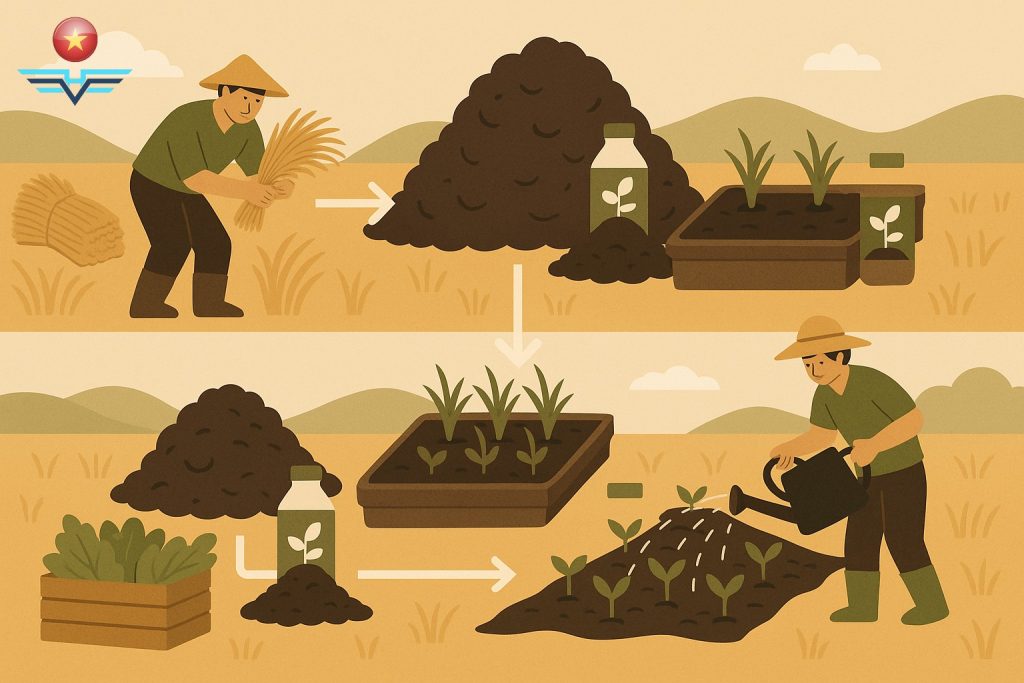
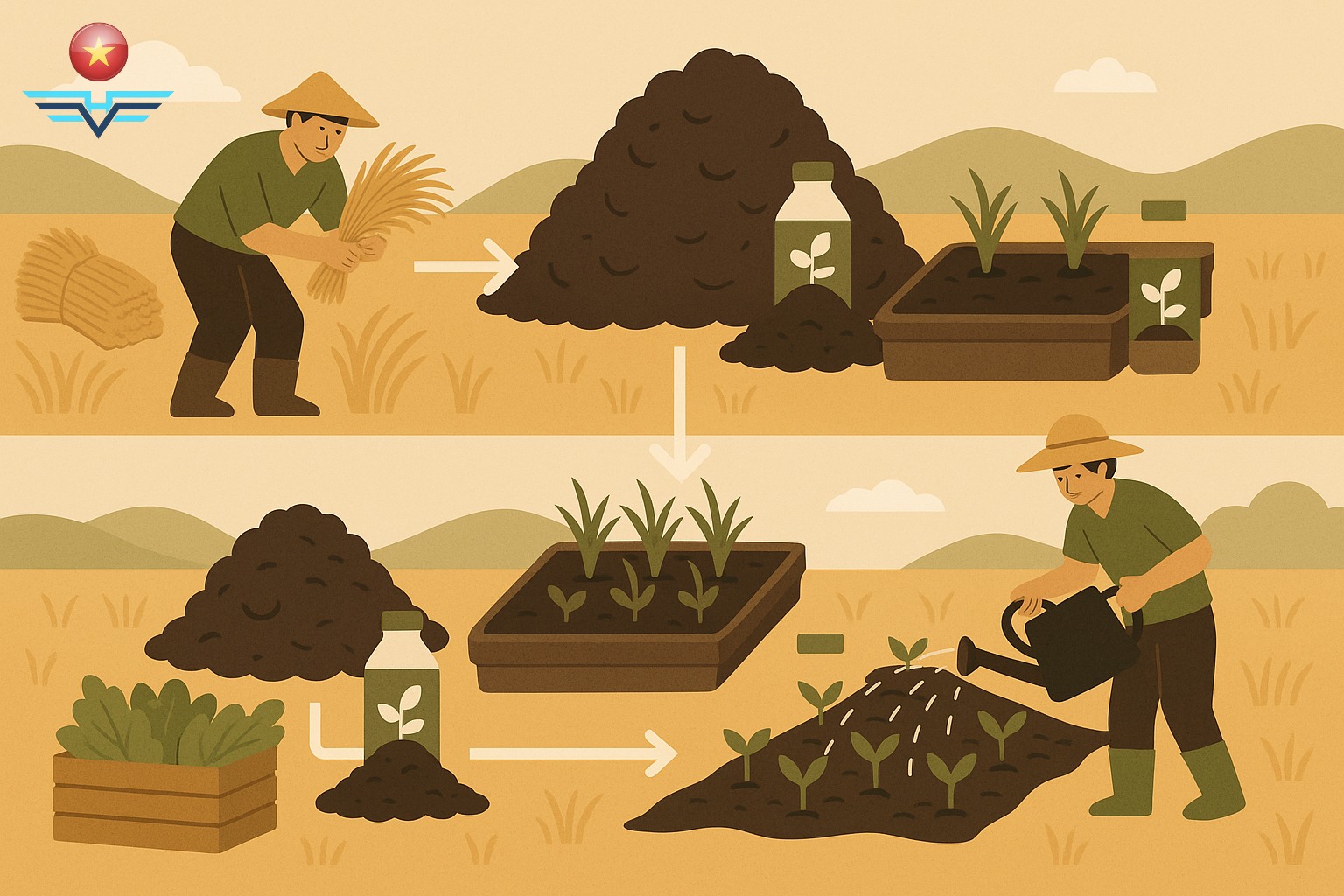
The award-winning project, titled “Applying Fito-Biomix RR to Treat Rice Straw in the Field into Organic Fertilizer for Crops to Protect the Environment,” has now expanded to produce not only fertilizer but also organic growing media for rice seedlings, microgreens, and organic vegetables.
According to Dr. Le Van Tri, the Fito-Biomix RR biological product contains organic-decomposing microbes, plant disease–resistant microbes, and essential minerals and trace elements. These microbes thoroughly break down post-harvest straw and stubble into nutrient-rich bio-organic fertilizer for agriculture. The product helps balance air, soil, and water quality, is safe for users, and improves soil structure.
Produced on an industrial scale, the product is inexpensive (40,000 VND per ton of straw), requires only 200 grams of inoculant per ton, and has a short processing time of 20–25 days, making it suitable for farmers’ seasonal needs. The resulting organic compost meets agricultural standards, conserves nutrients, and improves soil chemistry.
Since 2010, Dr. Tri has piloted the project in Hoa Binh, increasing farmers’ profits by 2.9–4.9 million VND per hectare. It has also been successfully tested in Thai Binh, Nam Dinh, Thanh Hoa, Hung Yen, and Hanoi. Results show that applying the organic fertilizer made from rice straw helps rice plants grow more evenly, reduces pests and diseases, and increases yields by 3.49–7.49 quintals per hectare (a 4.94–13.3% increase), raising economic efficiency by about 2.6–5.6 million VND per hectare.
Burning Straw—A Fire Hazard
After the winter–spring rice harvest, many farmers burn straw to prepare fields for the next crop, a practice that raises the risk of forest fires, especially during the dry season.
Recently in Hau Giang, a fire destroyed half a hectare of mixed garden land when a resident burned grass to grill fish.
Nguyen Vinh Phuc, head of the Hau Giang Forest Protection Department, said that while authorities have curbed the once-common practice of burning bee nests for honey, they have not yet controlled the high fire risk from farmers burning fields.
Expanding to Rice-Seedling Trays
The technology for producing rice-seedling trays was introduced to Vietnam but struggled to grow because of a lack of suitable growing media (such as sawdust, coconut coir, or manure) and an absence of standardized seedling-production methods.
CPCNSH has now developed a standard formula: using Fito-Biomix RR–fermented straw combined with local topsoil to create a breakthrough growing medium for both industrial seedling trays and seedlings grown on hard soil beds. This ensures high-quality seedlings ready for transplanting while cutting costs by about 50% compared with traditional sowing.
Reusing post-harvest straw to make organic seedling and microgreen substrates can be scaled up nationwide and even exported as a technology in the future.