

Why Fertilizer Label Knowledge Matters
Table of Contents
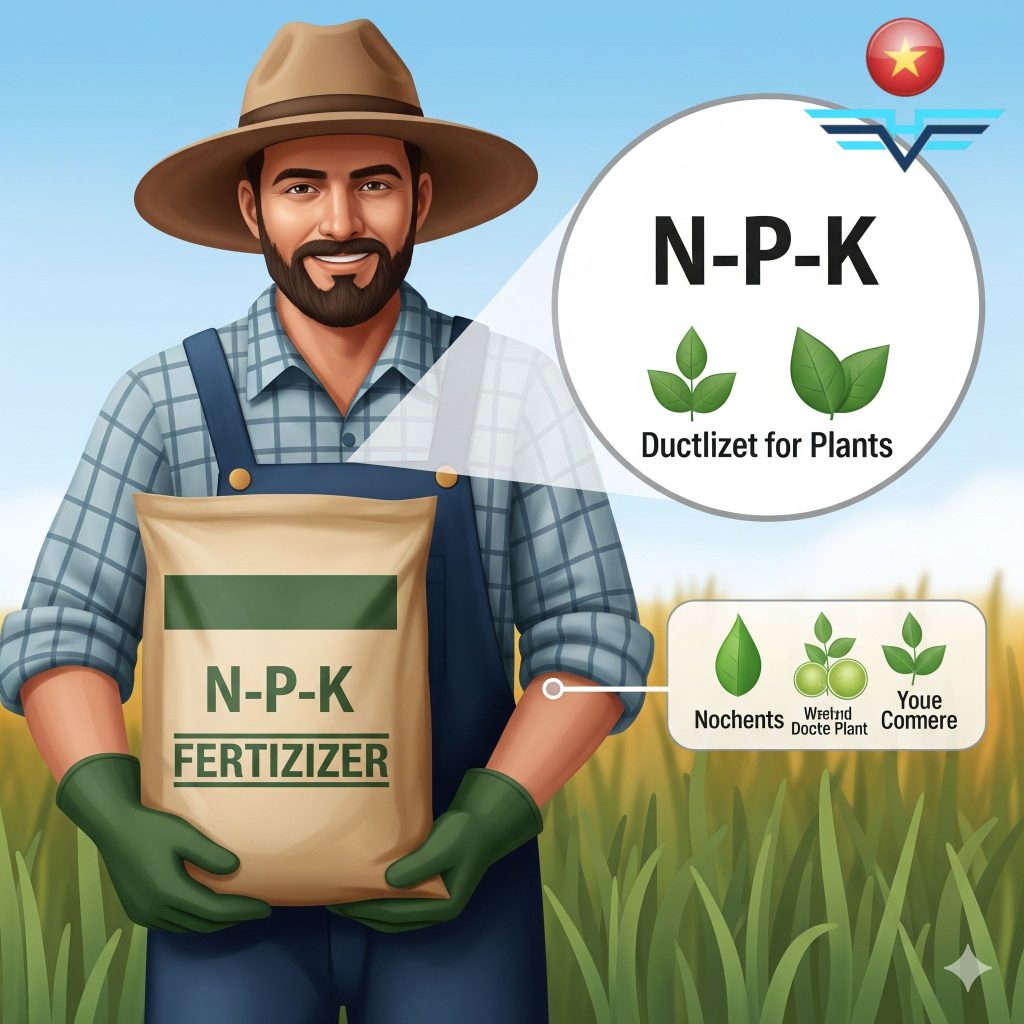
Today, over 95% of nutrients used in crop production come from inorganic fertilizers. The market offers a wide range—from single-nutrient products to complex blends—often labeled with scientific terms. Understanding these terms helps farmers choose the right fertilizer and avoid low-quality or counterfeit goods.
Key Fertilizer Types
Inorganic (Chemical or Mineral) Fertilizers
These are chemical compounds containing one or more essential plant nutrients. Common categories:
-
Nitrogen (N) fertilizers
-
Phosphate (P) fertilizers
-
Potash (K) fertilizers
-
Mixed or compound fertilizers (NPK, NPK + secondary or trace elements).
Nitrogen Fertilizers (N)
-
Urea [CO(NH₂)₂]: 44–48% pure nitrogen (commonly labeled 46% N).
-
Ammonium sulfate [(NH₄)₂SO₄] or SA: 20–21% N and 23% sulfur (S).
Phosphate Fertilizers (P)
Phosphorus content is expressed as % P₂O₅ (plant-available form).
-
Single superphosphate [Ca(H₂PO₄)·H₂O]: 15–17% P₂O₅ and 11–12% S; acidic, so apply with lime.
-
Fused magnesium phosphate (FMP): Also known as Van Dien phosphate; dissolves well in weak acids, ideal for acidic or upland soils.
Potash Fertilizers (K)
Potassium is expressed as % K₂O.
-
Muriate of potash (MOP, KCl): 50–62% K₂O; pink or white granules, slightly acidic.
-
Sulphate of potash (SOP, K₂SO₄): 45–50% K₂O and 18% S; less hygroscopic, preferred where chloride-sensitive crops grow.
Secondary Nutrients
-
Calcium (CaO): Improves soil pH and plant disease resistance; found in lime, shells, fused phosphate (28–30% CaO).
-
Magnesium (MgO): Vital for chlorophyll; often 15–18% in fused phosphate.
-
Silicon (SiO₂): 24–32% in fused phosphate; important for rice, maize, sugarcane, pineapple.
-
Sulfur (S): Present in superphosphate, ammonium sulfate, and compound fertilizers.
Micronutrients (Trace Elements – TE)
Typically include Zinc (Zn), Boron (B), Iron (Fe), Copper (Cu), Manganese (Mn), Molybdenum (Mo).
-
Label may show ppm or % content.
-
“TE” stands for Trace Elements and only has value when each micronutrient and its concentration are specified.
Compound & Mixed Fertilizers
-
NPK blends: Contain varying percentages of N, P₂O₅, and K₂O, sometimes plus secondary nutrients or TE.
-
Examples:
-
NPK 16-16-8+13S: 16% N, 16% P₂O₅, 8% K₂O, and 13% S.
-
NPK 12-12-5+TE: 12% N, 12% P₂O₅, 5% K₂O plus specified trace elements.
-
-
Diammonium phosphate (DAP – (NH₄)HPO₄): 18% N and 46% P₂O₅.
Buying Tips for Farmers
-
Check nutrient percentages: Higher % means higher nutrient concentration.
-
Look for clear labeling: Avoid products with vague nutrient claims or no ppm/% listed.
-
Select reputable brands: Prevents buying counterfeit or low-quality fertilizers.
-
Match fertilizer type to soil needs: Base decisions on soil tests and crop requirements.
Key Takeaway
Understanding fertilizer label terminology—NPK ratios, secondary and micronutrient content—ensures precise nutrient management, reduces input costs, and protects crops from the risks of poor-quality or fake fertilizers.