
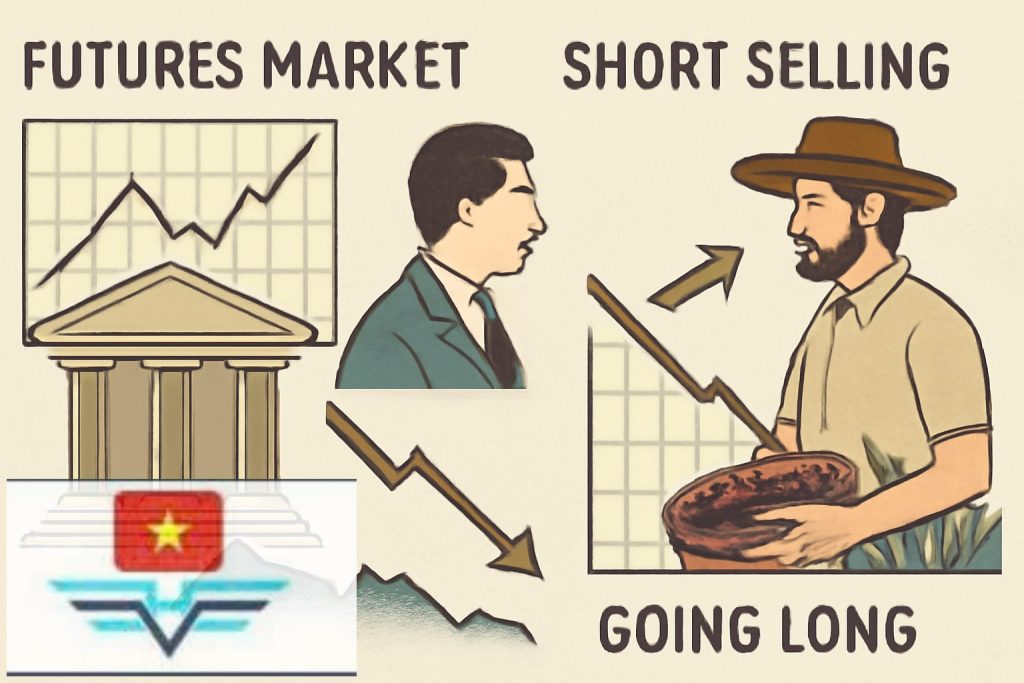
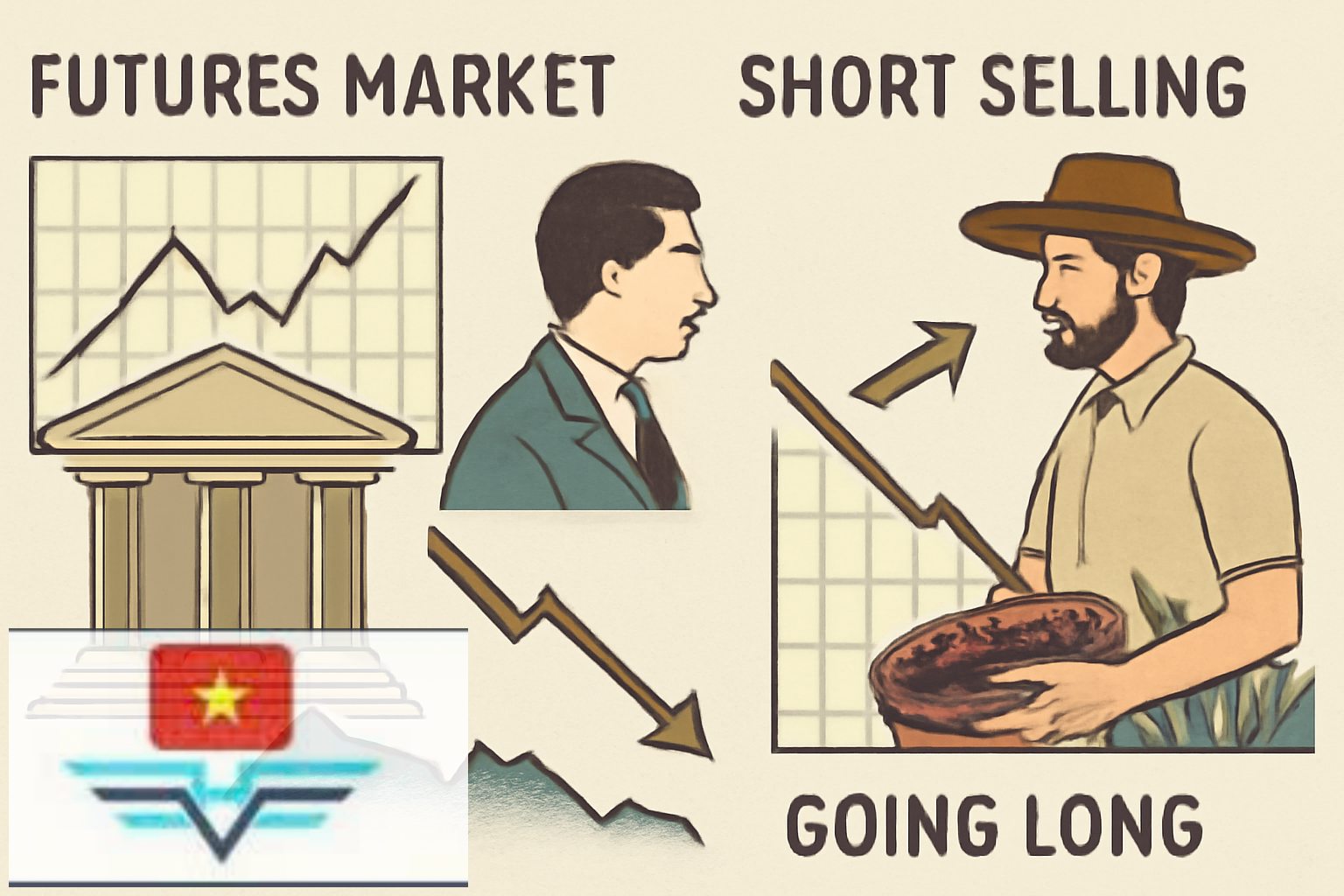
I – The Emergence of the Futures Market
The history of the birth of the futures market, also known as the futures exchange, still remains a subject of debate, with no concrete documentation confirming its origin or which country was the pioneer in inventing this type of market. However, people generally agree on a few important points:
-
The basic concept of the futures market originated from the rice market in Japan during the 17th century.
-
Due to agricultural development in the U.S. around the 1840s, Chicago became a central hub for farmers to sell their products. Around the same time, McCormick’s invention of the reaper further promoted the growth of wheat farming, which led to the birth of the Chicago futures market.
-
In 1870, the New York Cotton Exchange (NYCE) was established.
-
In 1882, the first coffee futures contract was traded on the New York Exchange.
The early stage of the futures market for certain commodities stemmed from farmers’ initiatives to tackle problems like price drops when there was a bumper crop, or being pressured to sell at low prices during harvest season while prices would rise when the crop was still maturing. The lack of uniformity in quantity measurement systems and quality testing methods also contributed to farmers being exploited by traders.
Even traders faced major risks due to market fluctuations caused by weather, transportation, etc.
What farmers wanted was the ability to sell their products when prices were high without being required to deliver them immediately (since they did not have the product ready for immediate delivery), or at least to know that the price was high enough to reinvest and support their families. They also wanted the opportunity to sell or deliver products over time instead of having to sell everything right after harvest.
In summary, the futures market was originally for farmers, by farmers, and for the benefit of farmers.
However, as society developed and internal issues with determining prices, buying/selling times, and delivery schedules emerged, more laws were introduced to make this market more complex and structured. Farmers were forced to improve their knowledge of the market to collaborate with traders in a shared environment.
II – Short Selling
Short selling is a right that is common in the futures market. There is no fraud in selling something that you don’t have in this context. Those who consider short selling fraudulent should spend time understanding its relevance.
Aside from fears of theft, there’s another reason why many farmers are forced to pick unripe coffee: even though they know it will reduce the yield compared to harvesting ripe coffee, they worry that the additional yield from ripe fruit will not compensate for the lower price once the coffee is released in large quantities.
If we had a well-established futures market for farmers today, they would have the right to short-sell the coffee on their trees and deliver it in January 2011 at $1,986 (minus the differential, market costs, warehouse fees, etc.).
A businessman who is yet to harvest, based on his own predictions, may believe that the price will drop at the time of harvest, and thus he has the right to short-sell and wait to buy when the price drops. Of course, if his prediction is wrong, he will bear the loss, but if he’s right, he will profit.
Large speculators, with access to professional analysts and reliable information sources, may predict that the price will drop at some point in the future. They too can short-sell and buy when the price drops.
In general, these players are short sellers in the market.
III – Speculative Buying, or Buying Ahead
On the contrary to short selling, speculative buying occurs when someone expects prices to rise in the future. The buyer has the right to choose when they will take delivery in the future.
There’s nothing wrong or illegal about a roaster buying ahead to secure stock for their production plan. Depending on the market situation and their production plan, they may choose a price and set a future delivery date.
A businessman who believes that the government’s temporary stockpiling policy will positively impact coffee prices can borrow money from a bank to buy futures contracts now.
If a farmer has coffee stored at the Coffee Exchange and uses it as collateral, they can still decide to buy more coffee, believing that the price will rise in the future. If the price rises, they can sell the coffee they bought; if the price falls, the coffee they have stored will depreciate.
At this point, these individuals could be referred to as speculators in a rising market.
I’d like to add that these speculators are not breaking any laws. The belief that they are taking advantage of price differences without contributing to production is outdated and does not align with modern market economics. It contradicts the market economy and obstructs the idea of global integration.
Looking back at the history of the past, we can see that the path of farmers and our market also has no other way forward. The creation of a comprehensive network from the Exchange to the farmers’ fields is something we should think about to replace the existing spontaneous agent system that has posed significant risks to farmers over time.