
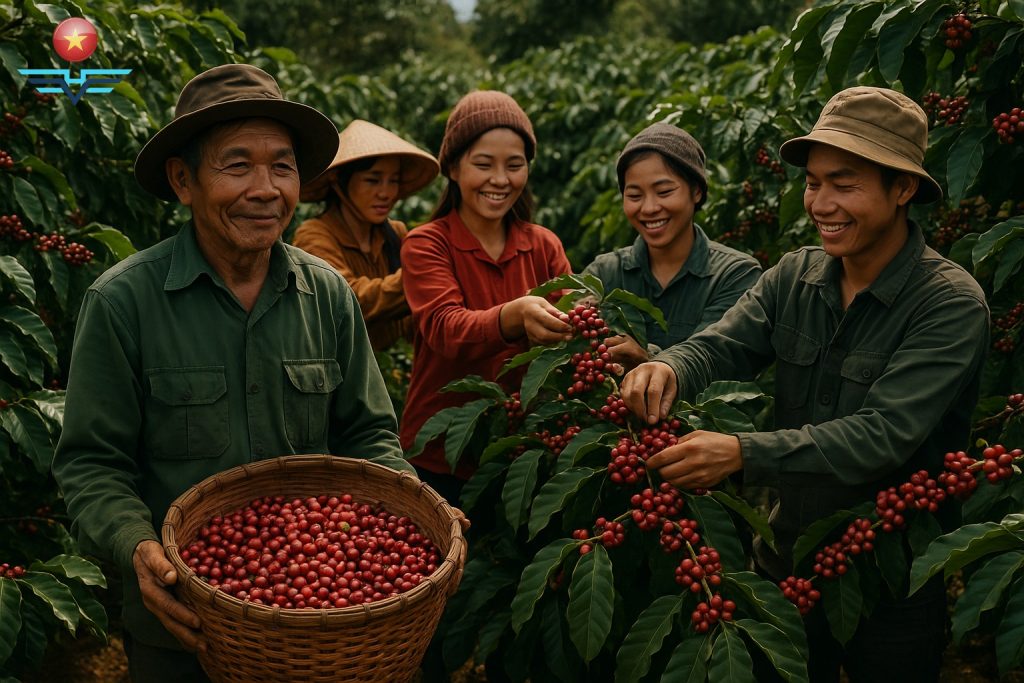
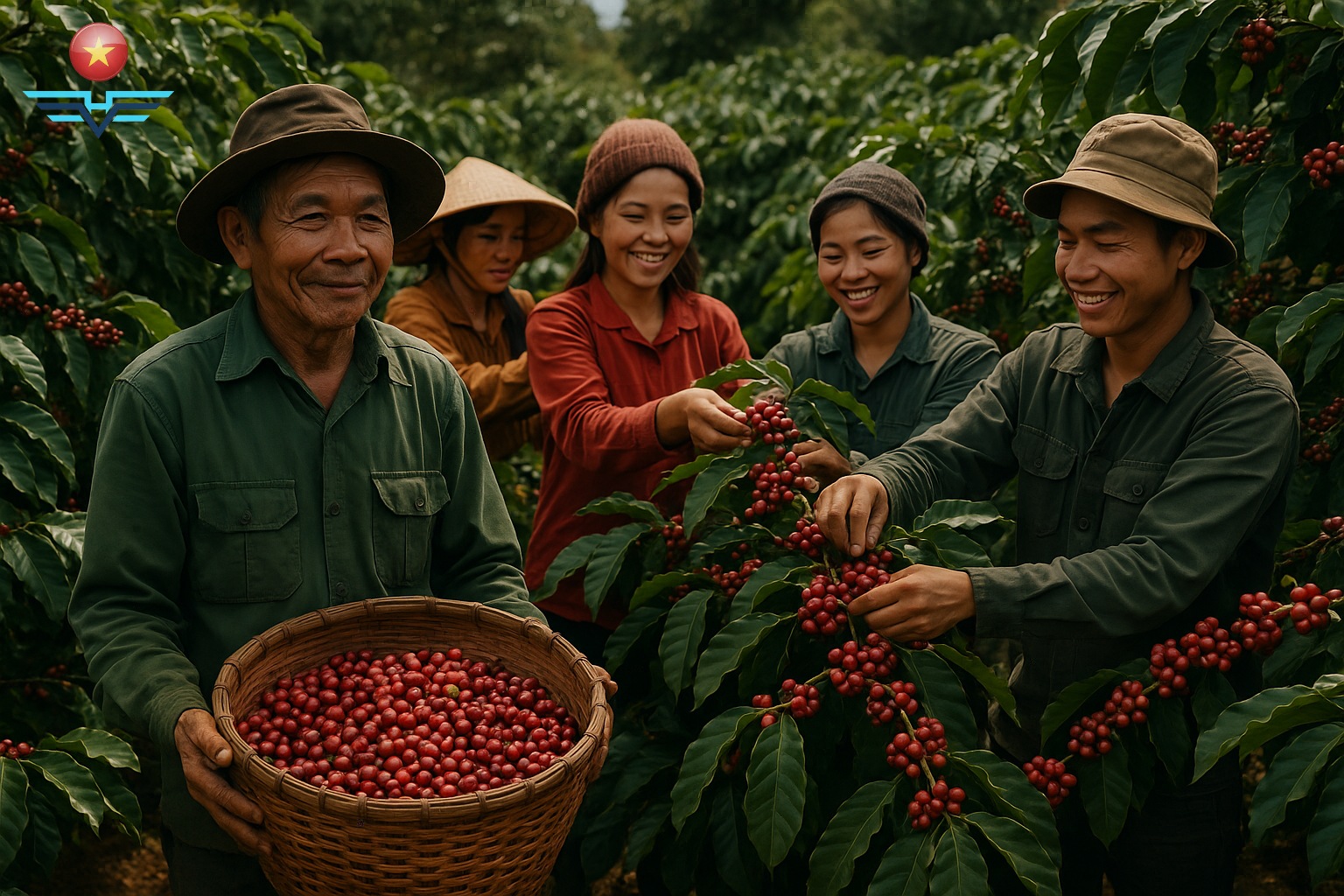
Once among the poorest communes of Lâm Đồng province—where local authorities had to deliver food aid every year—Tân Châu has made a dramatic economic and social leap forward by promoting settled farming and selecting the right crops.
Today, Tân Châu holds the title of Hero of Labor and is one of the wealthiest ethnic minority communes in Vietnam.
Back in 1990, provincial officials visiting Tân Châu described it as one of the province’s poorest places. Nearly half the population required government food relief four to six months each year. Two-thirds of the residents—ethnic Mạ, K’Ho, Tày, Nùng and others—had long practiced shifting cultivation. As forests shrank, nomadic life brought disease, illiteracy, and attacks by wild animals.
From Shifting Cultivation to Coffee
The commune Party committee patiently organized resettlement. Land was surveyed and allocated for houses and gardens. Suitable crops were identified, soil types mapped, and villagers guided to plant both rice and other food crops for self-sufficiency, while also intercropping coffee to build savings.
By 2000, Tân Châu had 3,000 ha of coffee, producing over 6,000 tons—six times the area and ten times the output of a decade earlier. Per-capita income surged from 700,000 VND to 10 million VND per year. The commune was honored with the national Hero of Labor award.
Today nearly 4,000 ha of coffee yield more than 12,000 tons annually, with average productivity exceeding 3 tons of beans per hectare—well above Vietnam’s coffee belt average. Per-capita income now tops 15 million VND a year. Coffee cherries turn the hillsides bright red each December, and beans are bagged and sun-dried everywhere.
A Landscape of Prosperity
Among the commune’s 2,128 households—mostly coffee farmers—about 680 families have built spacious houses costing from hundreds of millions to over one billion đồng each. Dozens of families own modern cars. Along National Highway 28, new multi-story houses rise beside lush plantations.
Unlike many ethnic minority areas, Tân Châu places strong emphasis on education: hundreds of local youths now study at universities and colleges.
“Millionaires from Bare Feet”
Village elder K’Lếu, now 63, recalls: “In the old days our people wandered the forests. Many died of disease or wild animals; children had no schooling. When the local government urged us to settle, we planted coffee, rice and raised cattle. Today the K’Ho are wealthy; no one goes hungry.”
K’Lếu and other elders have raised hundreds of millions of đồng for the commune’s education fund and persuaded every family to send their children to school.
K’Biểu, once reliant on food aid, now cultivates 12 ha of coffee yielding tens of tons annually: “If the officials hadn’t shown us how, I’d never have known how to grow coffee. Now I’ve replaced my old stilt house with a modern home and bought a car and tractor.”
Similarly, K’Phèng transformed his family from chronic poverty to affluence: his 10 ha of coffee bring in hundreds of millions of đồng each year. “Many families are richer than mine,” he says. “Our people followed the government’s advice—settled in one place and grew coffee—and that’s how we became prosperous.”