
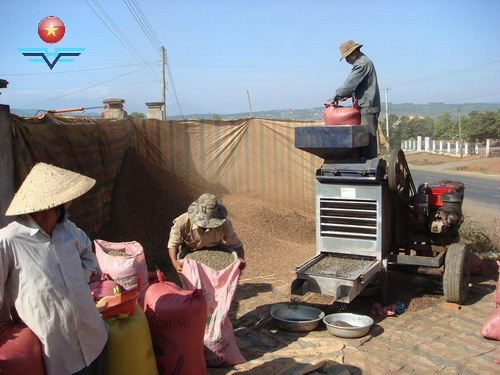
“We must immediately create added value through processing technology for products like rice, coffee, pepper, tea, and rubber…”
This was the shared analysis of many economists at the conference “Vietnam’s Economic Mindset in the Era of Reform and International Integration” held on February 26 in Ho Chi Minh City by the University of Economics and Law (UEL) and Dream House Company.
Identifying National Advantages
Huỳnh Thế Du, a lecturer with the Fulbright program, argued that in recent years Vietnam has poured billions of U.S. dollars into subsidizing industries like automobile production, steel, and shipbuilding through tax incentives. But these are not sectors where Vietnam holds natural advantages.
He compared it to an apple farmer who could switch to pears because he understands soil, water, and cultivation—but who could never produce copper wire. “Why is Vietnam trying to invest in car or ship manufacturing, while over 70% of our population works in agriculture and we already lead the world in exporting farm products and household goods?” he asked.
Echoing this, Lương Văn Tự, former WTO chief negotiator and now Chairman of the Vietnam Coffee and Cocoa Association, noted that while Vietnam is among the top global exporters of pepper, rice, coffee, tea, rubber, seafood, and textiles, most of these exports are only semi-processed. “We must quickly shift thinking toward sectors where Vietnam has true strengths and where value-added processing can give us a global edge.”
Delegates pointed to the Netherlands as a model: the country dominates world markets in flowers and dairy farming, investing even in fleets of planes to deliver fresh flowers globally. “The Dutch case shows how choosing a distinctive strength and investing boldly can define a national economic identity,” explained Assoc. Prof. Nguyễn Văn Trình of UEL.
A Needed Shift in Leadership Mindset
Assoc. Prof. Trần Đình Thiên, Director of the Vietnam Institute of Economics, stressed that economic mindset must change first at the leadership level. Policy vision must be backed by concrete strategies: what to do, who does it, and with what accountability. Mismanagement should carry consequences, even prison.
He added that Vietnam’s current priorities—macroeconomic stability and fighting inflation—require synchronized coordination across ministries, local governments, and enterprises.
Assoc. Prof. Nguyễn Văn Luân, Rector of UEL, suggested Vietnam could learn from China, where economic mindset reform began with top leaders and spread downward.
Lương Văn Tự noted that WTO entry was not the end, but the beginning. “Joining gives us a global business environment, but we must change our mindset to capture advantages. For example, by 2015, as a full ASEAN Economic Community member, Vietnam will face zero tariffs in a 500-million-strong market. Selling just food and farm products could bring prosperity—yet no ministry has seriously planned for this.”
Structural Challenges and Bold Proposals
-
Raising Civil Servant Salaries: Economists warned that without a drastic salary increase (tenfold, as in Singapore or South Korea), reforms will falter. Low wages encourage corruption and policy manipulation for personal gain.
-
Restructuring Industry: Vietnam continues to struggle with exchange rate and inflation pressures because of heavy trade deficits. Industrial machinery and equipment—simple to complex—are mostly imported. Even strong export performance cannot offset the foreign exchange drain. Therefore, rapid restructuring of consumer and heavy industries is essential.
The consensus: Vietnam must rethink its economic identity, placing agriculture at the forefront, using processing technology to add value, and building global brands. Agriculture should not remain a “stepchild” of policy but the foundation for Vietnam’s competitive strategy in the global economy.