
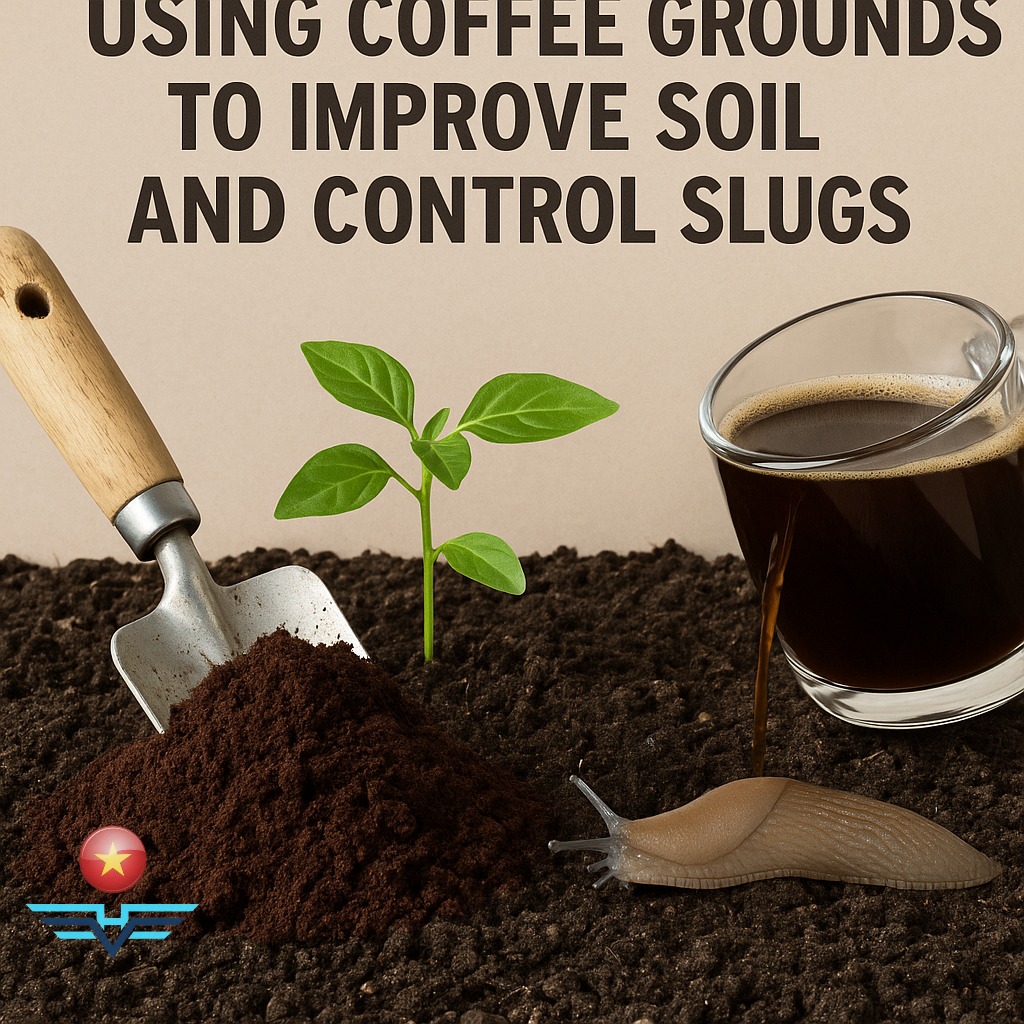
Coffee is among the world’s most widely consumed drinks—and its benefits extend far beyond keeping us awake. Used coffee grounds can enrich garden soil and compost, while liquid coffee itself can work as a natural slug repellent.
Coffee Grounds as a Soil Improver
According to various sources, between 400 billion and 1 trillion cups of coffee are consumed globally every year—creating huge amounts of spent grounds. Instead of sending them to the trash, gardeners can recycle these grounds to feed plants and help deter slugs.
Linda Brewer, a soil scientist with Oregon State University’s Extension Service, explains that coffee grounds can be mixed into garden soil or added to compost piles, but only in moderation. “People often get over-enthusiastic,” she says. “You really need to remember the recommended amounts. I’ve seen garden plots damaged by too much coffee grounds. Like most kitchen scraps, they can be a useful amendment—but not in excess.”
Despite popular belief, used coffee grounds are not highly acidic. After composting, their pH is close to neutral (about 6.5–6.8). Any change to soil acidity is short-lived, so they cannot reliably lower soil pH for acid-loving plants such as azaleas, blueberries, gardenias, or blue hydrangeas.
Coffee grounds provide a little nitrogen (about 1–2 %) and trace minerals, but they’re not a major fertilizer. As the grounds decompose, soil microbes temporarily hold on to nitrogen for their own growth. To balance this, Brewer recommends adding an extra nitrogen source—such as well-rotted manure, alfalfa meal, or fresh grass clippings—when mixing in fresh grounds.
They also contain small amounts of potassium, phosphorus, calcium, magnesium, and tiny amounts of iron, copper, manganese, and zinc—helpful but not enough to meet plants’ full nutrient needs. Their greatest value is improving soil structure: feeding beneficial microbes that release natural compounds and improve drainage.
For best results, mix coffee grounds into soil 1.5 cm to 10 cm deep. If using as a surface mulch, cover with leaves or bark to retain moisture. In a compost pile, layer three parts dry leaves, one part fresh grass clippings, and one part coffee grounds (you can toss in paper filters too). Turn weekly and keep moist; compost is ready in three to six months. Grounds should make up no more than 20 % of the pile by volume, or they may harm plants.
Uncomposted grounds can temporarily tie up nitrogen, and leftover caffeine may inhibit seed germination or slow growth of some plants. Store collected grounds in sealed containers until use. Mold may form, but it breaks down harmlessly in compost.
Coffee as a Natural Slug Deterrent
Perhaps even more striking than their compost value is coffee’s ability to repel and kill slugs. Studies show that a 1–2 % caffeine solution in water drives 100 % of slugs away from treated soil and then kills them through caffeine toxicity. In orchid tests, a 2 % caffeine solution killed 95 % of slugs and worked better than standard metaldehyde slug bait.
To make a 1–2 % soil drench, mix one part water with two parts strong brewed coffee (for example, one cup of water to two cups of coffee). To protect foliage from slug damage, dilute more—nine parts water to one part coffee—and spray the plants.
Brewer suggests first testing the diluted brew on a few leaves and waiting through several hot days to check for leaf burn or other damage. If there’s no harm, you can safely continue spraying.