
1. Overview: Vietnam’s Coffee Paradox
Table of Contents
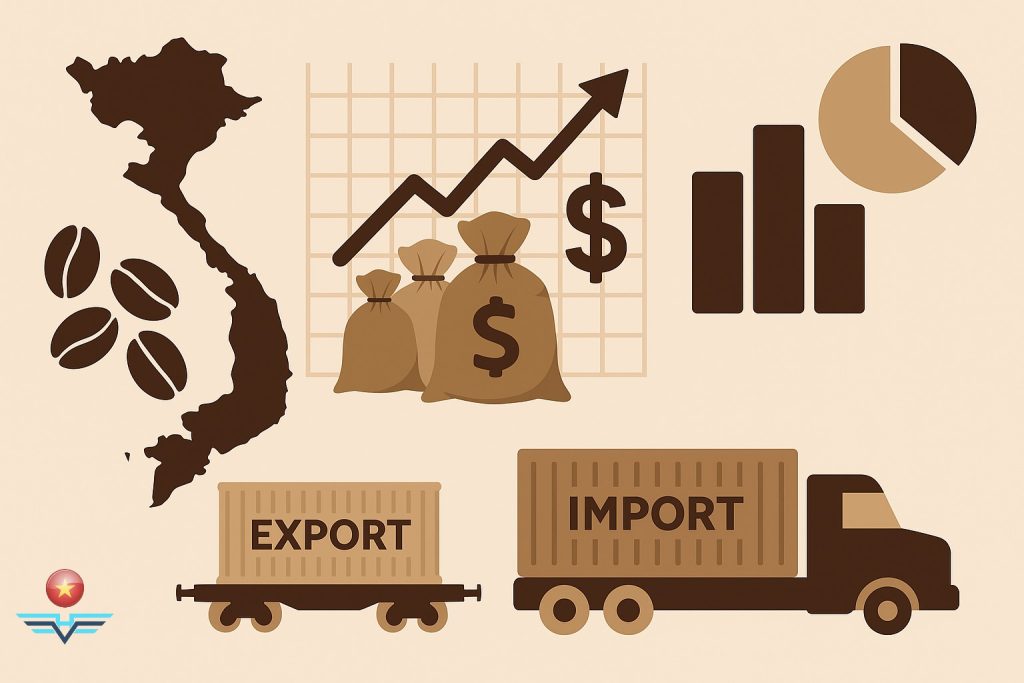
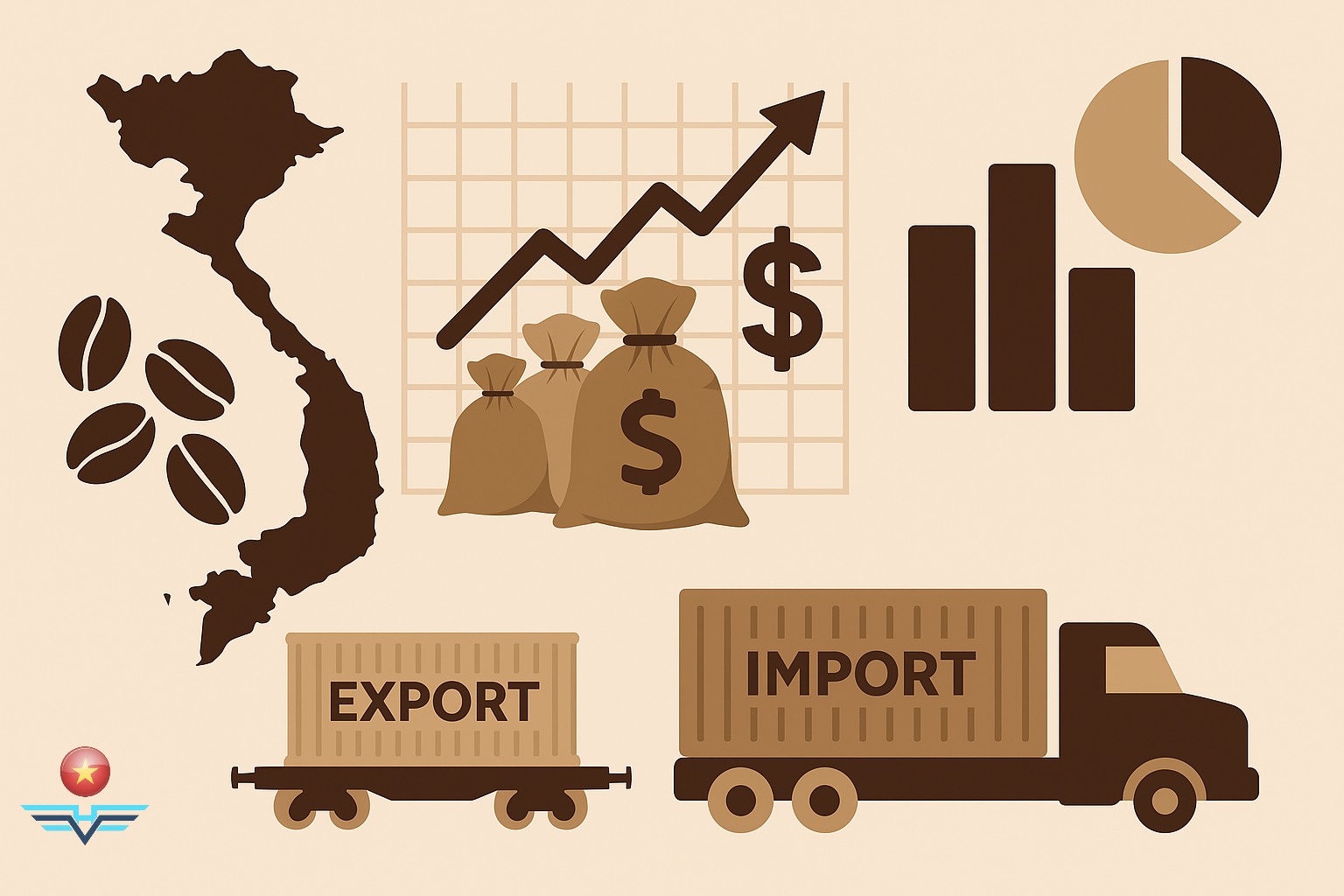
Despite being the world’s second-largest coffee exporter, by the end of the 2022–2023 crop year, Vietnam imported more than 102,000 tons of coffee from various countries.
At the same time, the nation achieved its highest-ever export value in coffee trade history.
This information was shared by the Vietnam Coffee and Cocoa Association (VICOFA) during the “Summary Conference for the 2022–2023 Coffee Crop and Orientation for the 2023–2024 Crop Year,” held in Ho Chi Minh City on November 10.
2. Vietnam’s Coffee Import Trends 2022–2023
According to VICOFA’s report:
-
Total coffee imports: 102,100 tons worth nearly USD 300 million, up 14% in volume and 9% in value from 2021–2022.
-
Green coffee imports: 98,600 tons valued at USD 246 million (+19% volume, +23% value).
-
Processed coffee imports: 3,500 tons worth over USD 53 million (–46% volume, –29% value).
Vietnam’s main coffee suppliers include Laos, Indonesia, Brazil, Belgium, Colombia, Germany, Papua New Guinea, India, Peru, Thailand, Honduras, and Singapore.
3. Why Does Vietnam Import Coffee?
VICOFA Chairman Nguyen Nam Hai explained that imports mainly serve processing and re-export purposes.
Vietnam buys green beans from regions with lower prices or varieties unsuited to local climates, such as Arabica.
“Arabica coffee can only be cultivated in limited areas in Vietnam, so the supply is small. Since Arabica has higher quality and value, we import it for blending and consumption,” Mr. Hai said.
4. Growth of Domestic Coffee Chains and Premium Imports
Vietnam’s local coffee chains have expanded rapidly in recent years, while many foreign brands have entered the market.
These businesses import roasted or instant coffee to maintain their own quality standards.
Such premium imports are mostly served in hotels, restaurants, and high-end cafés, where local coffee still struggles to match quality requirements.
5. Record Coffee Export Performance
Despite rising imports, Vietnam achieved record export earnings during the same period, with the highest coffee prices in nearly 30 years.
However, VICOFA noted that raw coffee still dominates exports, while deep-processed coffee makes up less than 10% of total output — mostly for domestic use.
Key Export Data (2022–2023)
-
Export volume: 1.66 million tons (≈ 27.7 million bags) ↓ 4.5% YoY
-
Export revenue: USD 4.08 billion ↑ 3.4% YoY (record high)
-
Average price: USD 2,451 / ton, ↑ 5.5% YoY
By Product Type
-
Robusta: 1.5 million tons → USD 3.2 billion
-
Arabica green coffee: 41,500 tons → USD 169 million
-
Decaffeinated green coffee: 36,000 tons → USD 136 million
-
Roasted & instant coffee: 90,000 tons → USD 510 million (5.4% volume; 12.5% value)
6. Price Outlook and 2023–2024 Crop Forecast
At the conference, market analyst Nguyen Quang Binh forecasted that coffee prices will remain high through the 2023–2024 season, driven by roasters replenishing global inventories.
“Arabica prices have climbed from 140 to 175 cents per pound (VND 70,000 → 92,000/kg) and may increase further,” he noted.
For Robusta, prices might face temporary pressure during the early harvest but are expected to stabilize by year-end and stay firm through mid-2024 as EU and U.S. monetary policies normalize.
7. Delayed Harvest in Key Regions
According to VICOFA, the 2023–2024 harvest will start later than the previous year.
In provinces such as Gia Lai, Kon Tum, and Son La, harvesting is expected to begin in late October or early November, peaking around December 2023.