
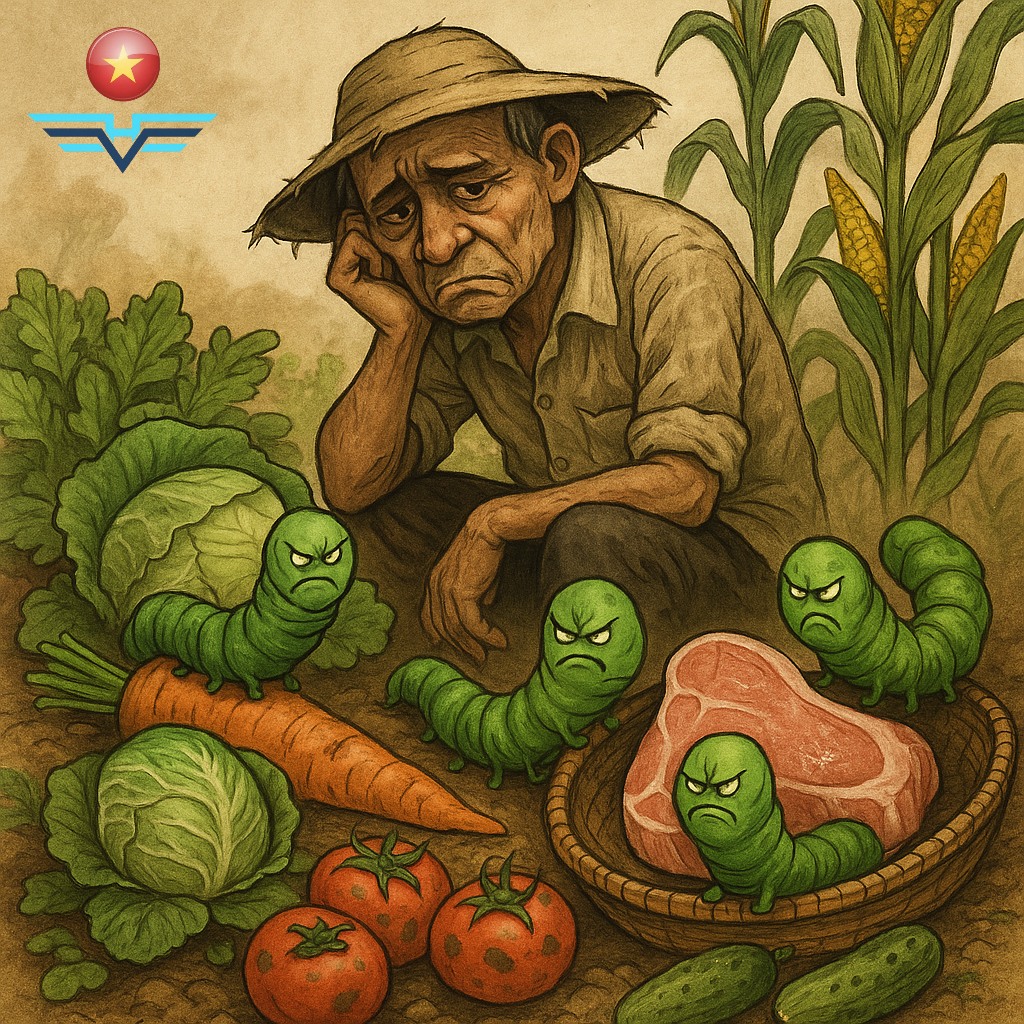
Public Alarm Over Food Safety
Table of Contents
Vietnam’s debate about whether food and drink are clean or contaminated is not new—but public concern has rarely been as intense as it is today.
-
Fruit treated with chemicals, vegetables pumped with growth stimulants, and scandals from tainted pork to toxic fish have left many saying: “It’s scary to eat anything these days.”
-
Ordinary consumers, whom the Minister of Health once said are “eating mostly dirty food,” are anxious.
-
Yet the biggest victims are the farmers themselves—over 50 million people whose livelihoods are undermined by unsafe and fraudulent practices.
Farmers Caught in a Perfect Storm
Vietnamese farmers already face relentless challenges:
-
Natural disasters—floods and storms frequently threaten crops.
-
Aggressive competition from neighboring agriculture known globally for producing goods “fast and cheap.”
-
Unpredictable market manipulation—foreign traders sometimes buy Vietnamese crops in bulk, then suddenly stop purchases, leaving farmers stranded.
Even as the government promotes rural development, builds new countryside programs, and consolidates farmland for large-scale production, farmers remain vulnerable.
The Rise—and Risk—of Industrial Farming
The “Khoán 10” reforms transformed Vietnam from a subsistence economy into the world’s second-largest rice exporter. But large-scale farming is now a gamble:
-
A single epidemic or crop failure can wipe out investments.
-
Even without total loss, debts accumulate quickly.
Farmers work tirelessly, but when banned chemicals poison agriculture, their own countrymen often reject their products.
The “Lean-Meat” Pork Scandal
A striking example is the recent lean-meat pork crisis:
-
The Department of Livestock Production reported that banned fattening agents caused pork prices to fall by 8,000 VND per kilogram in just one month.
-
Vietnam consumes about 250,000 tons of live pork monthly, so pig farmers lost roughly 2 trillion VND every month.
Farmers are extremely sensitive to market swings:
-
Vegetables left unsold for days become worthless.
-
Livestock that is not sold at the right time outgrows its prime.
By the time their names are cleared, the financial damage is permanent.
Who Bears Responsibility?
These losses are neither the farmers’ fault nor the consumers’, yet both groups suffer.
-
Farmers struggle under debt and public distrust.
-
Consumers fear for their health and pay higher prices for safe food.
The question remains unanswered: Where does the responsibility lie?
-
Stricter enforcement of food-safety laws and stronger regulation of chemicals and farming practices are essential.
-
Authorities must crack down on illegal additives, support farmers with affordable credit, and restore consumer trust to protect both producers and the public.