
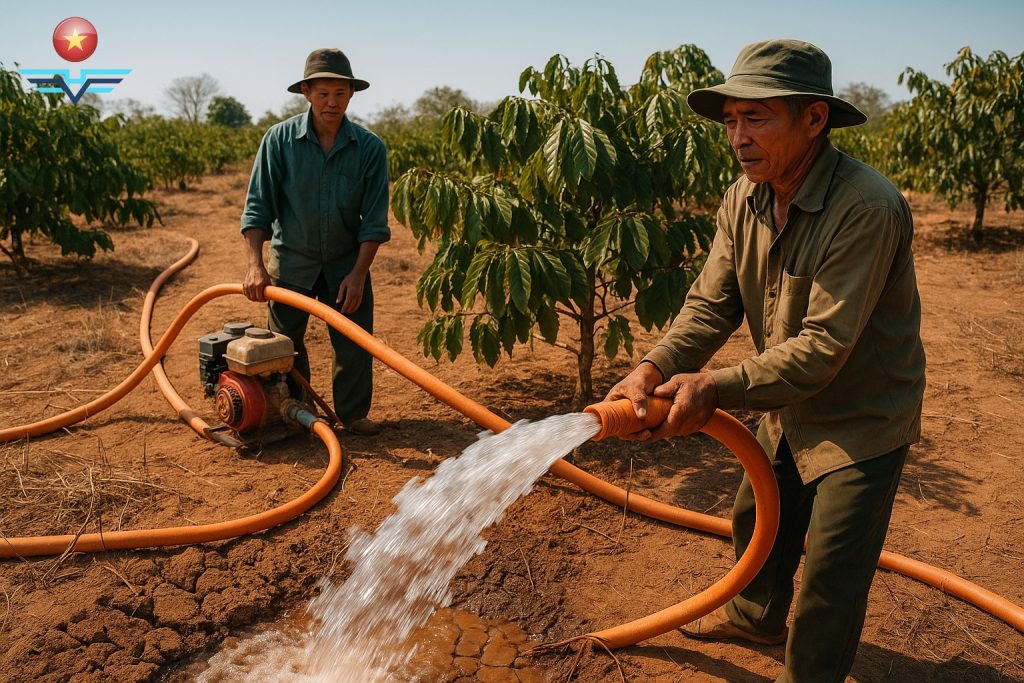
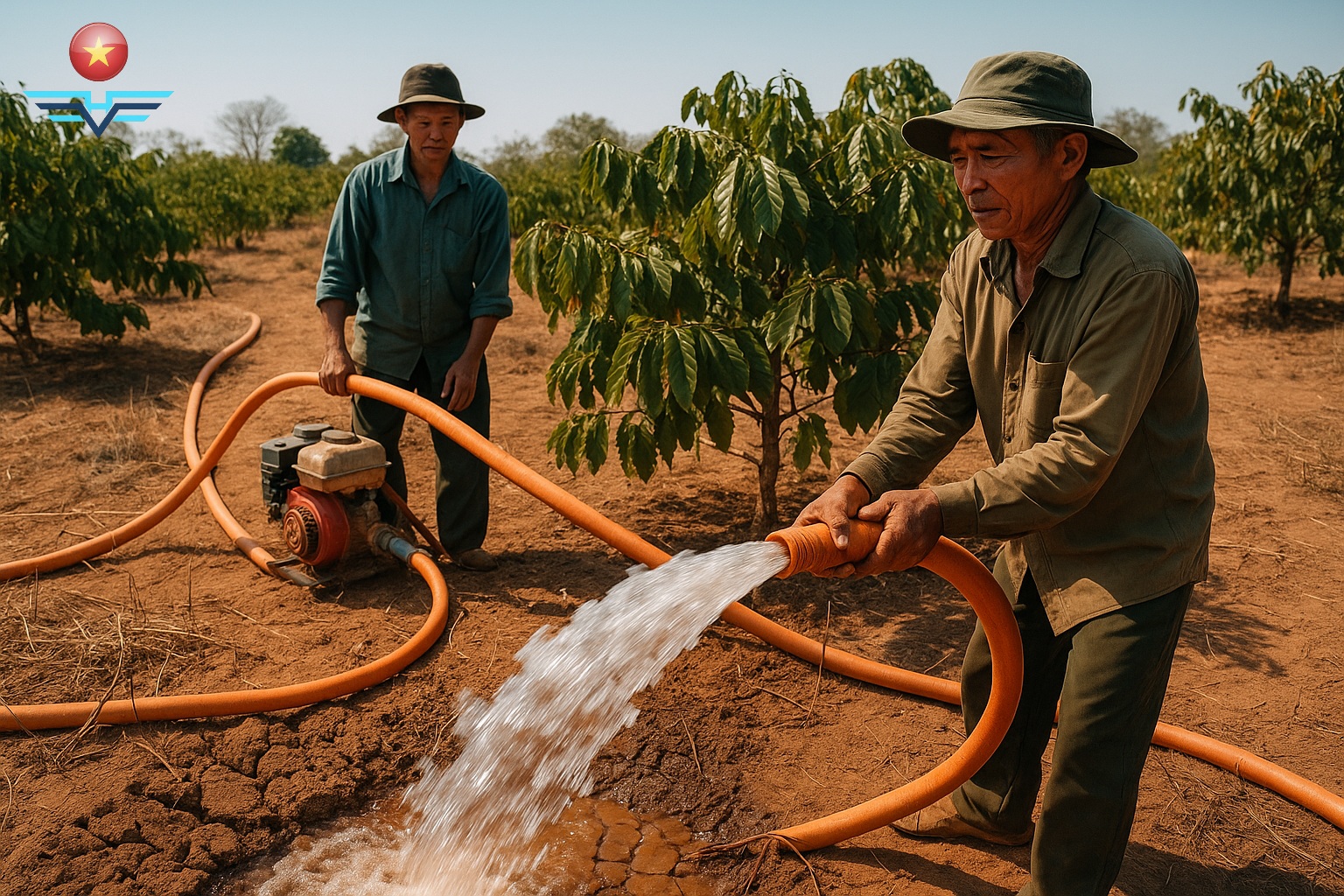
Coffee farmers across Vietnam’s Central Highlands are working intensively to dredge irrigation works and dig or drill thousands of new wells to make the most of every water source in an effort to protect their coffee trees from drought.
According to the Central Highlands Agroforestry Science and Technology Institute, prolonged heat in Đắk Lắk, Đắk Nông, Lâm Đồng, Gia Lai, and Kon Tum has left rivers, streams, ponds, and reservoirs nearly dry.
The region currently has over 452,000 hectares of coffee. Tens of thousands of hectares already face serious water shortages, threatening yield and even total crop loss in the coming season. In Đắk Lắk Province alone, more than 10,000 hectares of coffee lack sufficient irrigation, with nearly 3,000 hectares at risk of total loss.
Under standard intensive-cultivation guidelines, coffee must be watered three to five times during the dry season, at intervals of 22–24 days, with about 400 liters of water per plant per irrigation cycle.
Farmers in major coffee-producing districts—such as Ea H’Leo, Krông Búk, Cư M’Gar (Đắk Lắk), Lâm Hà, Di Linh, Đức Trọng (Lâm Đồng), and Đắk Mil (Đắk Nông)—are investing heavily to dig or drill thousands of wells, often 20–30 meters deep, to secure water for their coffee. Many households have spent 20–30 million VND to dig wells inside ponds and reservoirs and pump water to keep coffee plants alive.
Authorities in Krông Búk District have directed local cooperatives to guide ethnic minority farmers in dredging wells, clearing reservoirs, and regulating water flows to avoid conflicts over water use between neighboring coffee farms. The district also plans to allocate local budget funds to subsidize fuel costs for pumping water and to advise farmers in water-scarce areas to switch to other high-value perennial crops.
The Central Highlands Agroforestry Institute recommends that provinces and farmers re-plan coffee cultivation areas, halting uncontrolled expansion and planting coffee only on suitable land with reliable water sources. Most of the coffee now suffering water shortages was planted spontaneously, outside planned zones. Local governments are urged to convert land with poor water access or steep slopes (over 15 degrees) to other crops and to expand the planting of shade trees and windbreaks. These measures would reduce irrigation frequency during the dry season and help ensure sustainable coffee production.
Another strategy to mitigate drought risk is drought insurance. In Đắk Lắk, more than 30 coffee-farming households have already purchased drought insurance for the 2011–2012 season. Policies are based on rainfall measurements from the nearest station and the actual condition of the insured coffee area. If the total rainfall recorded during the insured period falls below the agreed threshold, the insurance company compensates the farmers accordingly.