
With careful consideration and responsibility when interpreting or presenting data during this period, we advise readers to treat the information as one of many data points to analyze, rather than using it for speculation. The weather-related updates should be used to help manage risks rather than as a basis for speculation.
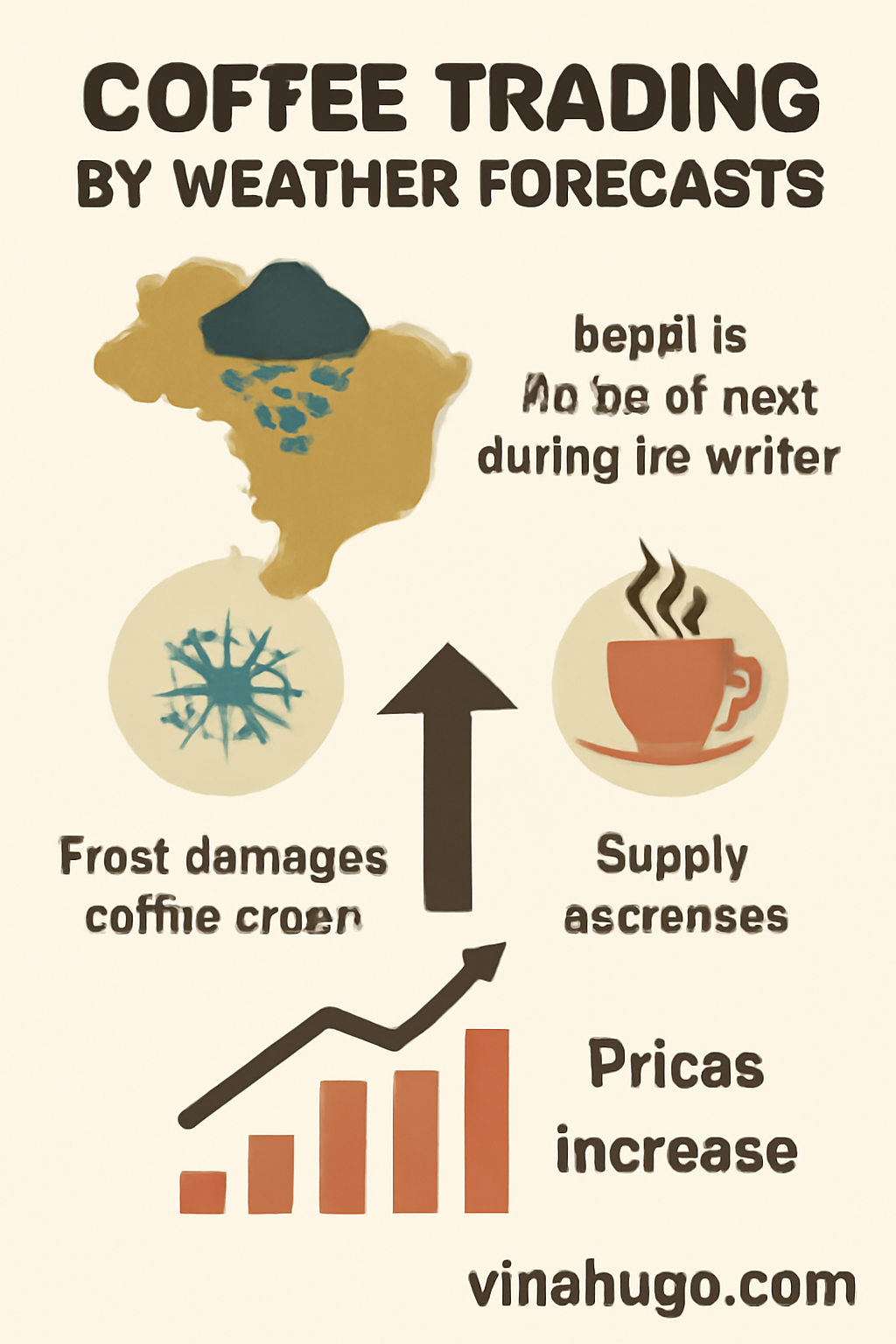
Brazil, the world’s largest coffee producer, is facing the possibility of frost after witnessing hailstorms in April 2011. This could result in a 40% increase in coffee production costs, as Kraft Foods Inc. and J.M. Smucker raised their prices.
The likelihood of frost in Brazil this year has increased due to the weakening of the La Niña phenomenon, where ocean temperatures in the Pacific Ocean cool down. The Brazilian weather forecasting agency, Somar, reported this change earlier this week. Frost in Brazil in 1994 resulted in about 35% crop loss, driving coffee prices up by 39% that year. If frost damage occurs this year, coffee prices could reach a record high of $4.20 per pound, according to a Bloomberg survey.
Arabica coffee prices have surged by 25% this year due to rising consumption outpacing supply. The supply shortage could be as much as 6.2 million bags for the season starting in October, according to Rabobank International. Kraft, the parent company of Maxwell House Coffee, has raised prices three times in the past year. In February, the company estimated that its commodity costs in North America would increase by $700-800 million in 2011, or about 1.5% of its total 2010 revenue.
Rodrigo Costa of Newedge USA LLC, who correctly predicted the rise in coffee prices last year, said, “If Brazil experiences frost, we could see unprecedented price levels, and the situation could become unbearable.”
Weather and Cold Fronts
La Niña is weakening, and weather patterns are showing further signs of diminishing strength, according to a report from Australia’s meteorological office on April 27. Marco Antonio dos Santos, a meteorologist at Somar in Brazil, explained:
“As La Niña weakens and the air turns colder, cold air from Antarctica is expected to strengthen and may reach Brazil’s southern central regions.” This area includes Minas Gerais, Brazil’s largest producer of arabica coffee.
Cold air from Antarctica is expected to reach southern Brazil around May 9, 2011, with temperatures predicted to drop to 5°C. Santos noted that coffee plants could be damaged if temperatures fall below 1°C.
Costa from Newedge also stated, “Even if no adverse weather causes damage, the supply situation is still tight.”
Hailstorms in April
In April 2011, several areas in Brazil experienced hailstorms, resulting in a loss of 50,000–60,000 bags of coffee, according to Somar. Brazil produced around 55.5 million bags last year, according to the USDA. This year’s crop is estimated to be around 41.9 to 44.7 million bags, according to the Brazilian Ministry of Agriculture.
Famous financier Walter “Bucky” Hellwig, who manages $17 billion at BB&T in Birmingham, and who accurately predicted the rise in gold and oil prices in February, said, “If Brazil doesn’t have a bumper crop this year, we will see immense pressure on prices.”