
Coffee mixed with butter, corn, flavorings, even chemicals used in making antibiotics and soap—just to give customers a cup of coffee that fits their “preferred taste.” Yet anyone addicted to this type of coffee may be carrying the seeds of chronic illness and even cancer.
Coffee – a “small investment, huge profit”
Table of Contents
Mr. N.V.Đ., a former employee at a small coffee-processing shop on Lê Đức Thọ Street (Gò Vấp, Ho Chi Minh City), revealed: “With my former boss’s method, this business yields four to five times profit on the capital.” He added, “All you need is a mixer, a grinder, and two plastic tubs.”
To create the “dark and bitter” powder, he explained the formula: 1 kg butter + 1 kg coffee beans + 1 kg corn flour. After roasting the coffee beans and corn flour, everything is ground together with butter. The mixture is then enhanced with chemical flavorings and additives to increase bitterness and thickness.
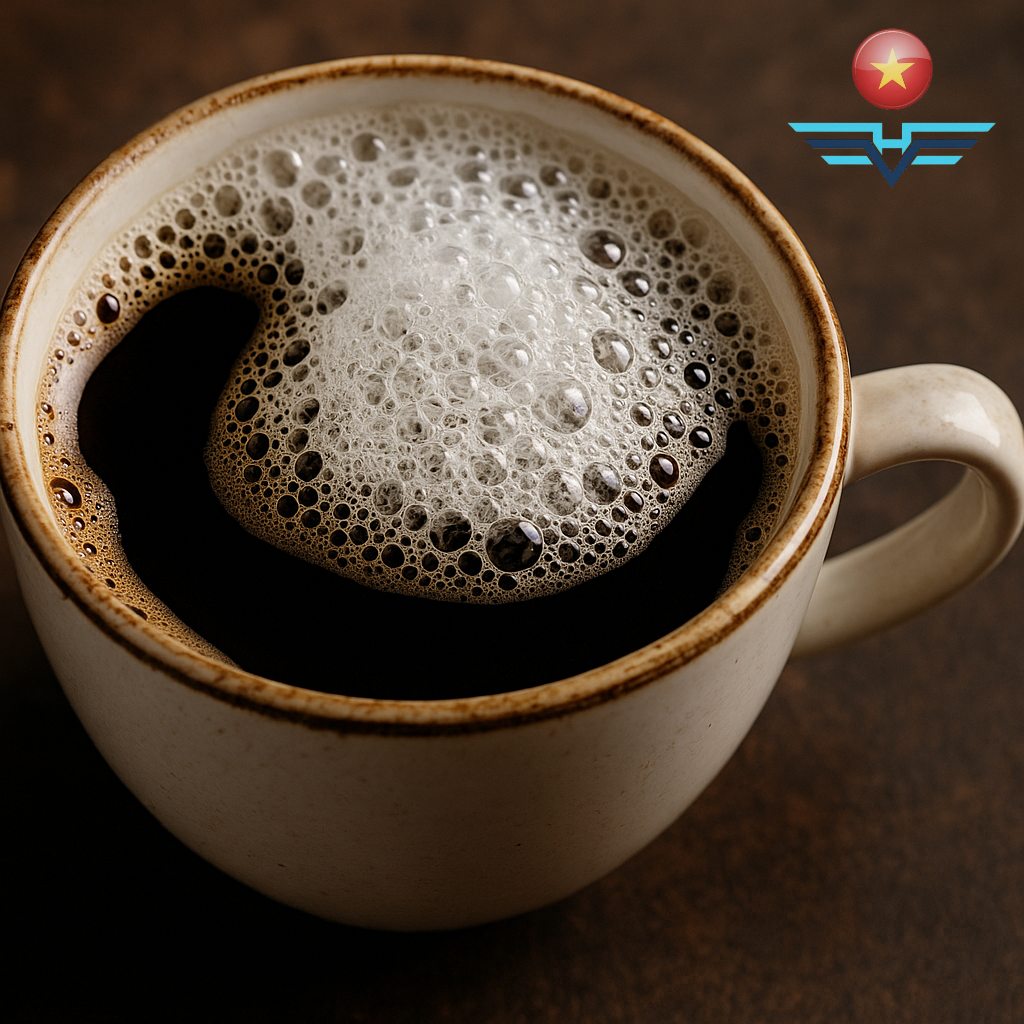
Many cafés even add more chemicals to create a “special aroma.” Because many customers prefer coffee with lots of foam, some operators mix in a foaming agent easily purchased from industrial chemical suppliers.
According to Mr. Đ., not only sidewalk coffee vendors but also many suburban cafés buy this coffee. Thanks to a low “wholesale price” and a 10% commission, it sells quickly. In Bình Thạnh and Thủ Đức districts alone, his shop used to sell 40–50 kg per day.
Drinking soap bubbles
Dr. Nguyễn Thị Ngọc Diệp—Deputy Head of the Department of Nutrition and Food Safety, Institute of Public Health—explained: “The foaming agent some producers add is sodium lauryl sulfate, a chemical normally used to make soap. It is never approved for use in food.
This substance is sold as a concentrate. According to the World Health Organization, it is toxic if ingested or inhaled and can damage the intestines and liver. Even shampoos containing this chemical may cause hair damage, eye irritation, and hair loss. Prolonged exposure combined with other chemicals can eventually lead to cancer.”
She added, “Overusing artificial coffee flavorings is also harmful. Coffee beans naturally contain caffeine, but some unscrupulous producers add synthetic caffeine to deceive consumers. Drinking coffee adulterated this way can cause restlessness and an artificial sense of alertness even if the brew is bulked out with corn. But caffeine cannot be freely added to food; it must meet strict purity and heavy-metal limits.
Although no cases of acute poisoning from such coffee have been reported, consumers should be cautious—long-term chemical accumulation in the body can lead to chronic disease.”
What is real coffee?
Mr. Huỳnh Lê Thái Hòa, head of the Ho Chi Minh City Food Safety Department, admitted: “With a city as large as Ho Chi Minh City, it’s impossible to fully control these underground coffee processors who supply street vendors.”
The director of a coffee-export company recounted: “Two years ago, some western-region vendors asked me to make coffee following their own chemical formula. When I checked Kim Biên Market, I discovered the bittering agent they requested is used in antibiotic production.
To turn coffee from brown to black, some people use caramelized sugar—a costly ingredient—so many switch to industrial dye costing only 30,000 VND/kg. Just a spoonful can make 10 kg of coffee jet-black. But my professional ethics wouldn’t allow it.”
As a result, her company now exports mainly to the U.S. and Japan instead of selling in Vietnam, proving that certain local consumer tastes have been “feeding” these chemical coffee operations.
How to protect yourself
The best way to avoid fake coffee is to give up the habit of drinking pitch-black, overly thick brews with lots of foam.
Real coffee has the color of deep amber, not a tar-black hue. It carries a naturally rich aroma and leaves a gentle, sweet aftertaste. When whisked, it forms only a small amount of foam that disappears quickly. In contrast, coffee laced with foaming agents produces abundant, long-lasting bubbles—and carries hidden health risks.