
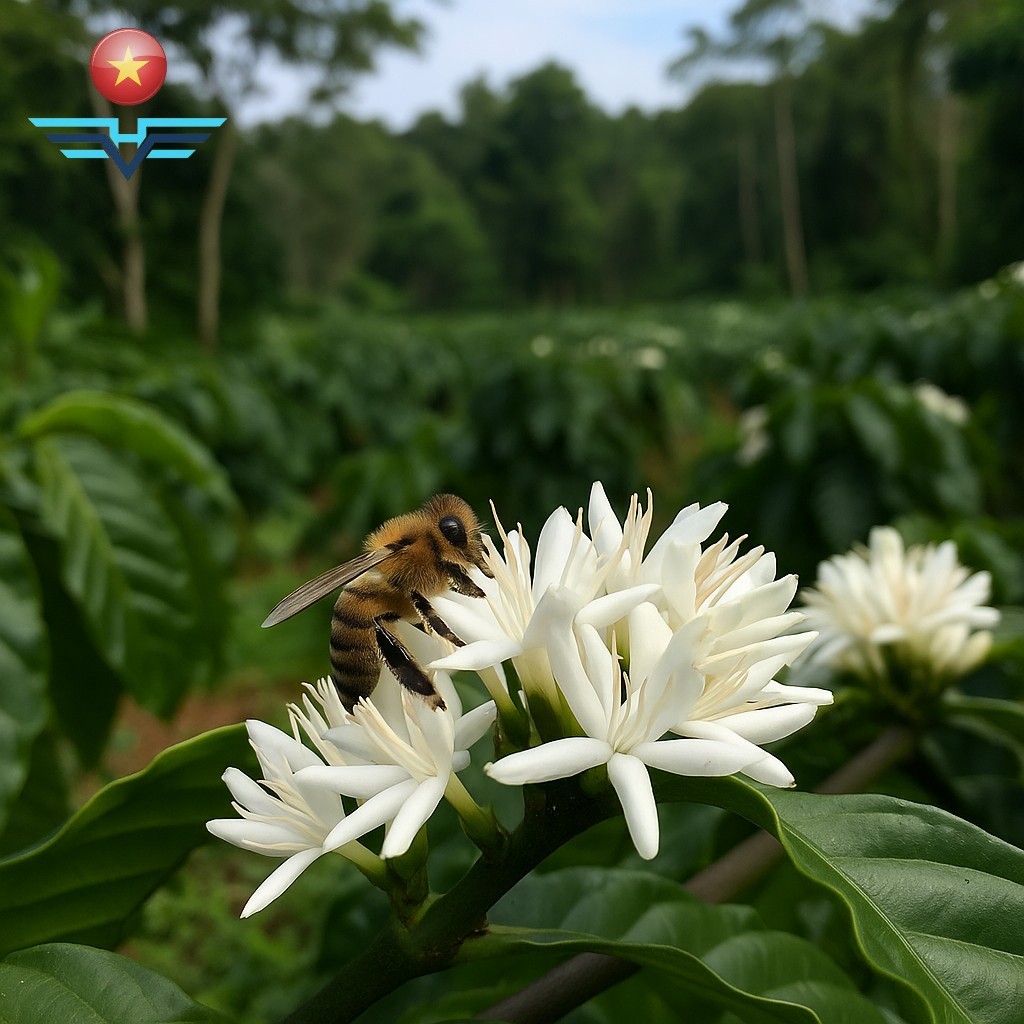
New scientific research shows that protecting tropical forests near coffee plantations can increase coffee yields by about 20% and farmer income by around 7%. The key driver: wild forest bees cross-pollinate coffee plants, improving both yield and bean quality.
Why Forests Matter for Coffee
Table of Contents
Coffee’s Global Importance
-
Coffee is the fifth most valuable agricultural export for developing nations.
-
Around 25 million people worldwide depend on coffee production.
-
The crop thrives in cool, humid highlands, the same environment where tropical rainforests grow—areas often cleared to expand coffee fields.
Ecosystem Services from Forests
Forests provide vital ecosystem services, including:
-
Habitat for wild pollinators
-
Natural pest control
-
Biodiversity conservation
The Costa Rica Study
Research Site and Pollinators
-
Location: Finca Santa Fe, a large Costa Rican Arabica coffee plantation bordering tropical forest.
-
Pollinators studied: introduced honeybees (Apis mellifera) and ten native stingless bee species (subfamily Apidae Meliponinae).
Key Findings
-
20% increase in coffee yield when wild bees cross-pollinate coffee plants.
-
7% higher farmer income due to improved production.
-
25% fewer small or misshapen beans, which improves cup quality and market value.
Economic Value of Forest Bees
-
$60,000 annual income gain from wild bee pollination in just 35 ha of forest.
-
In contrast, Costa Rica’s forest-protection payment is only $42 per hectare per year—far less than the direct profits farmers gain from nearby forest ecosystems.
Distance Matters
-
Bee pollination effects were strongest within 1 km of the forest.
-
Beyond 1 km, the yield benefit from wild bees dropped sharply.
Broader Implications
For Coffee Farmers
-
Conserving nearby forests is not just an environmental action; it is a direct investment in higher yields and better bean quality.
For Global Agriculture
-
About two-thirds of the world’s food crops depend partly on animal pollinators.
-
Other crops—such as watermelon and sunflower—also benefit from planting near biodiverse forest areas, which host both pollinators and natural pest enemies.
The findings underscore that forest conservation benefits both biodiversity and farmers’ profits. Maintaining tropical forests next to coffee plantations delivers a triple win:
-
Higher coffee yields and quality,
-
Increased farmer income, and
-
Long-term ecological sustainability.